Search This Blog

Showing posts with label Theologian. Show all posts

Wednesday, 7 August 2019

John Wycliffe

EARLY LIFE 

John Wycliffe was born in the village of Hipswell near Richmond in the North Riding of Yorkshire, England in around 1320.

Fictional portrait of John Wycliffe, c. 1828

All we know about John Wycliffe's parents is that they were of early Saxon origin, long settled in Yorkshire. They held property principally centred on Wycliffe-on-Tees, about ten miles to the north of Richmond. Hipswell, his birthplace, was an outlying hamlet.

Young John was probably educated initially by his village priest. The Yorkshireman left for Balliol College, Oxford University in around 1345 at a time when a series of illustrious names was adding glory to the fame of the university-such as those of Roger Bacon, Thomas Bradwardine, William of Occam, and Richard Fitzralph.

John Wycliffe owed much to William of Occam's work and thought; he showed an interest in natural science and mathematics, but applied himself to the study of theology, ecclesiastical law, and philosophy. Even his opponents acknowledged the keenness of his dialectic. His writings prove that he was well grounded in Roman and English law, as well as in native history.

The student Wycliffe probably lost many of his university chums through the Black Death epidemic, which ranged between 1349 and 1353.

EARLY CAREER 

Wycliffe's university career followed the usual course. While as baccalaureate he busied himself with natural science and mathematics. He attained the headship no later than 1360; as master he had the right to read in philosophy. More significant was Wycliffe's interest in Bible study, which he pursued after becoming bachelor in theology.

Wycliffe taught Philosophy at Oxford for most of his career while nominally serving as a Priest in a succession of parishes.

John Wycliffe portrayed in Bale's Scriptor Majoris Britanniæ 1548.

When John Wycliffe was presented by the college in 1361 with the parish of Fylingham in Lincolnshire, he had to give up the leadership of Balliol, though he could continue to live at Oxford; he is said to have had rooms in the buildings of Queen's.

In 1368 Wycliffe gave up his living at Fylingham and took over the rectory of Ludgershall in Buckinghamshire, not far from Oxford, which enabled him to retain his connection with the university.

Wycliffe obtained a bachelor's degree in theology in 1369, and his doctorate three years later. As such such he made use of his right to lecture upon systematic divinity. By now Wycliffe was recognized as the leading theologian and philosopher of his age.


Wycliffe received the crown living of Lutterworth in Leicestershire in 1374, which he retained till his death.

King Edward III of England appointed Wycliffe to a commission in 1375 studying differences between the Crown and Papacy. He was sent to Bruges to discuss with the representatives of Gregory XI a number of points in dispute between the king and the pope.

BELIEFS

John Wycliffe challenged penances, indulgences, absolutions, pilgrimages, the worship of images, the use of Holy Water, the adoration of the saints and the distinction between pardonable and mortal sins. He used Scripture as the standard of judging and promoted preaching as being "of more value than the administration of any Sacrament." He said the Bible contains all that is necessary for salvation and emphasised the individual's direct relationship with God through Christ.

Wycliffe's political ideas were summarised by the phrase "dominion is founded in grace" which was an attack on unjust monarchs, emperors, popes, and bishops who claimed their people must obey them as obedience is God's will.


LATER CAREER

John Wycliffe denounced the worldliness and luxury of the papacy. "Christ is Truth" he wrote, "the pope is the principal of falsehood." He concluded that Christ, not the pope, is the head of the church, which annoyed the Catholic hierarchy.

In 1378 he was summoned before the Bishop of London and Wycliffe stubbornly refused to compromise his beliefs. Only a last minute letter from the Queen Mother, Joan of Kent prevented Wycliffe from being pronounced a heretic and he was freed to continue his writing.

In 1381 Wycliffe provoked his greatest reaction yet, with his attack on transubstantiation. He published twelve arguments against the idea that bread and wine of Holy Communion are transformed into the actual physical body and blood of Christ.

John Wycliffe at work in his study

William Courtney, Archbishop of Canterbury, called a council in 1382 in order to condemn the opinions of Wycliffe and his adherents. During the sittings held in the Dominican monastery at Blackfriars, London, a great earthquake shook the city, which caused many to wish to break up the assembly. However William Courtney persuaded them to continue and Wycliffe and his followers were denounced as heretics.

Later Wycliffe was summoned before the synod at Oxford. The interrogation ended when his patron, the king's uncle John of Gaunt who had accompanied Wycliffe, became involved in a brawl with the Bishop of London. Wycliffe was neither excommunicated nor deprived of his living. However, he was expelled from Oxford and forced to retire to his parish at Lutterworth.

ENGLISH BIBLE AND OTHER WRITINGS

"The Morning Star of the Reformation", as John Wycliffe was later nicknamed, found that the continuing restrictions he was placed under freed him to spend much of his later years translating the Bible into vernacular English from Latin.

John's Gospel in Wycliffe's Bible

Wycliffe's Bible appears to have been completed by 1384, additional updated versions being done by Wycliffe's assistant John Purvey and others in 1388 and 1395.

John Wycliffe's English translation of the Bible had to be written out laboriously by hand and it took a copyist nine months to produce one copy at a cost of £40.

Wycliffe's followers were known as the Poor Priests or Lollards (mumblers, so called as they mumble the Bible as they read it). They were sent out to win souls without a purse or staff in their hand and were dependent on food from neighbors. All they carried were a few pages of Wycliffe's Bible and his tracts and sermons.

William Frederick Yeames, Wyclif Giving "The Poor Priests" His Translation of the Bible

The Lollards were clad in russet robes of undressed wool, and went about barefoot.

Wycliffe was fond of cricket metaphors. The original bat was a primitive club, used for attack and defence. In an early translation of the Bible, Wycliffe equipped a crowd of men with "swerdies and battis" while smugglers in southern England who moved about armed with cudgels were referred to as "the Sussex batsmen". When in 1545 Wycliffe's tract on Transubstantiation was published, it was referred to as "Wycliffe's Wicket," presenting "a narrow opening to Salvation."

PERSONAL LIFE 

According to The Testimony of William Thorpe (1407), it appears that Wycliffe was spare of body, indeed of wasted appearance, and not strong physically.

Doctor Evangelicus, as Wycliffe was nicknamed, was fearless and stubborn.  According to William Thorpe, he was of unblemished walk in life, and was regarded affectionately by people of rank, who often consorted with him, took down his sayings, and clung to him. But when he turned upon them his roughest side, as for example in his sermons, polemical writings and tracts, Wycliffe met the attacks with a tone that could not be styled friendly.

LATER LIFE, DEATH AND LEGACY 

While Wycliffe was hearing the Mass in the Lutterworth parish church on Holy Innocents' Day, December 28, 1384, he was paralysed by a stroke. Wycliffe died on December 31, 1384 aged around 64.

The Archbishop of Canterbury, Arundel, did not give Wycliffe a favorable eulogy alleging: "that pestilent and most wretched John Wycliffe of darnable memory, a child of the old devil and himself a child or pupil of Antichrist who while he lived, walking in the vanity of his mind-with a few other adjectives, adverbs and verbs which I shall not give-crowned his wickedness by translating the scriptures into the mother tongue."

The Council of Constance convened by John XXIII declared Wycliffe a heretic on May 4, 1415. They banned his writings, effectively both excommunicating him retroactively and making him an early forerunner of Protestantism.

The Council also decreed that Wycliffe's bones be dug up and burnt. This order, confirmed by Pope Martin V, was carried out in 1428.

Burning Wycliffe's bones, from Foxe's Book of Martyrs (1563)

Wycliffe is considered to be the first great English Christian reformer and was a great influence on those from other countries such the Czech reformer Jan Hus. His translation of the Bible into English made him the father of the English prose.

The most famous phrase in Abraham Lincoln's Gettyburg's Address – "government of the people, by the people, for the people" – were likely pinched from the prologue to Wycliffe's Bible.

A mission's agency bearing his name (Wycliffe Bible Translators) was founded in 1934 by American translator Cameron Townsend. They continue to translate the scriptures into languages around the world.

Monday, 8 October 2018

John Toland

The religious philosopher John Toland was born in Ardagh on the Inishowen Peninsula in northwestern Ireland on November 30, 1670.


Having formally converted from Catholicism to Protestantism at the age of 16, Toland adopted a liberal point of view influenced by the philosophy of John Locke. He was the first person called a freethinker (by Bishop Berkeley) 

John Toland was one of the pioneers of the deist movement, the predominant philosophy of the Anglican Church in the late 17th and pre Wesley 18th century. 

Toland's first book Christianity not Mysterious published in 1696 was also his best known tome. In his controversial work, Toland argued that God is a rational being and that the Christian mysteries are the result of clerical manipulations. Such was the public outcry in Ireland that he is forced to flee to England. 

Wikipedia

He went on to write over a hundred books in various topics but mostly dedicated to criticizing ecclesiastical institutions.

Toland was interested in the ancient pagan religion of the Druids and was in particular fascinated by the four thousand-year-old stone circles and other monuments, which he believed was built by them. In September 1717 Toland held the first known Druid revival ceremony at Primrose Hill, in London, at the Autumnal Equinox, to found the Mother Grove, what is later to become the Ancient Order of Druids (AOD). He was elected as the first Chief of the Mother Grove. 

Toland died aged 51 in Putney, London on March 11, 1722. 

Wednesday, 11 April 2018

Charles Spurgeon

Charles Spurgeon was born on June 19, 1834, in Kelvedon, in the English county of Essex.

He was the eldest child of Eliza Jarvis and John Spurgeon. His father and grandfather were both independent ministers.

Charles Spurgeon by Alexander Melville 

On January 6, 1850, a snow storm made the 15-year-old Charles Spurgeon seek shelter in a Primitive Methodist chapel in Colchester, Essex. He was converted from nominal Anglicanism while listening to a local preacher there. The text that moved young Charles was Isaiah 45:22 – "Look unto me, and be ye saved, all the ends of the earth, for I am God, and there is none else."

Spurgeon was baptized on May 3, 1850 in the River Lark, at Isleham.

Later in 1850, Spurgeon moved with his family to Cambridge and he was appointed the pastor of the small Waterbeach Baptist Chapel in Cambridgeshire.

A story is told of when the then unknown Spurgeon was invited to preach at a church. The young preacher was instructed to finish by 12.00, as some needed to catch transport at that time. Spurgeon said he wouldn't finish at 12.00. "Who is this conceited young preacher?" they thought! At 5 to 12 Spurgeon proclaimed "I have been preaching for 45 minutes to the wicked unrepentant sinner. They can leave now as I am going to preach to the believer." Not many left.

In 1854, three months before his 20th birthday, Spurgeon was appointed Baptist pastor at New Park Street Chapel, in Southwark, London. At the time it was the largest Baptist congregation in the city, but numbers had dwindled for several years.

Spurgeon quickly gained fame for his directness in preaching, which seemed to some to border on irreverence. But the power of his sermons led to many conversions. He drew vast congregations to the Exeter Hall, and (to the scandal of some) to the Surrey Gardens Music Hall, when his own Chapel was being extended.

Spurgeon preaching at the Surrey Music Hall circa 1858.

Charles Spurgeon's sermons were so popular that in 1861 a new hall, the Metropolitan Tabernacle, near the Elephant and Castle, London, was built to accommodate his expanding congregation. It seated 5000 people with standing room for another 1000.

Over the next thirty years Spurgeon became possibly the greatest preacher of his age, 6,000 gathered at the Metropolitan Tabernacle to hear him twice each Sunday. However he remained aware of the responsibility of his calling, claiming he "trembles" lest he should misinterpret the Word of God.

Spurgeon was so popular that Queen Victoria donned a disguise so she could sneak into one of his services and hear what he had to say.

The Metropolitan Tabernacle in 2004. Secretlondon at English Wikipedia

Spurgeon started in 1857 a Pastors' College, Spurgeon's College, which trained nearly 900 men before his death.

Stockwell Orphanage was an orphanage started by Spurgeon, which opened on September 9, 1869 in London, and was originally for fatherless boys only. It began taking girls as well ten years later. At this point there were 500 children living there.

Spurgeon gloried both in being a Calvinist and in being a Baptist. But he left the Baptist Union doing the 'Down-grade Controversy' of 1887. Spurgeon alleged that an incremental creeping of Charles Darwin's theory of evolution, and other concepts were "downgrading" the Baptist Union and some Baptist Ministers were relaxing their grasp of vital doctrines.

Spurgeon was an abolitionist. He lost support from the Southern Baptists, and received scores of threatening and insulting letters as a consequence.

Charles Spurgeon

His numerous works included an extended commentary on the Psalms, The Treasury of David (1872-85).

His weekly sermons were published in printed form every week selling for a penny each and each sold up to 25,000 copies a week.

Spurgeon was legendary for both his humor and his body language and regarding the latter alongside his lecture notes, he issued accompanying diagrams for arm and body movements.

By the time of his death in 1892, Spurgeon had preached nearly 3,600 sermons and published 49 volumes of commentaries, sayings, anecdotes, illustrations and devotions.


Spurgeon's sermons still remain one of the all-time best selling series of writings published in history.

Spurgeon suffered ill health toward the end of his life, afflicted by a combination of gout, rheumatism and Bright's disease. He often recuperated at Menton, near Nice, France.

Charles Haddon Spurgeon, "Prince of Preachers," preached his last sermon at the Tabernacle in London on June 7, 1891.

After 31 years as minister of the Tabernacle, Charles Spurgeon passed away on January 31, 1892.

His remains were buried at West Norwood Cemetery in London, where the tomb is still visited by admirers.

Tomb of Charles Spurgeon By Perseus 1984 

Spurgeon's son Tom became the pastor of the Metropolitan Tabernacle after his father died.

Source The Lion History of Christianity

Saturday, 19 August 2017

John Robinson (bishop of Woolwich)

A left wing modernist, The Anglican Bishop of Woolwich, John A.T. Robinson (May 16, 1919- December 5, 1983) was a major force in promoting the modern liberal Christian theology that came to the fore in the 1960s.

Bishop John Robinson Source BBC News clip

Robinson came to many people's attention when in 1960 he controversially defended the publication in Britain of D.H. Lawrence's famously sexually explicit novel, Lady Chatterley's Lover.

The bishop wrote several well-received books. The most popular was Honest to God published in 1963, which sold over a million copies and was translated into 17 languages.

In Honest To God Robinson appeared to question the existence of a personal God but his honesty in sharing his own personal doubts concerning prayer, supernatural elements of Christianity and even the meaning of the existence of God, reassured many. Its success attracted attention to the liberal modernism movement and the consequent theological debate resulted. 

Friday, 28 April 2017

Joseph Priestley

EARLY LIFE 

Joseph Priestley was born on March 24, 1733, to an established English Dissenting family in Fieldhead, Birstall, – about six miles (10 km) southwest of Leeds, Yorkshire.

He was the oldest of six children born to Mary Swift and Jonas Priestley, a finisher of cloth.

His mother died when Joseph was about six. When his father remarried in 1741, Priestley went to live with his aunt and uncle, the wealthy and childless Sarah and John Keighley, 3 miles (4.8 km) from Fieldhead.

Priestley by Ellen Sharples (1794)

Because Joseph was precocious—at the age of four he could flawlessly recite all 107 questions and answers of the Westminster Shorter Catechism—his Calvinist aunt sought the best education for the boy, intending him for the ministry.

During his youth, Joseph attended local schools including Batley Grammar school where he learned Greek, Latin, and Hebrew.

Priestley's birthplace (since demolished)

EARLY CAREER 

In 1751, Priestley started studying for the ministry at Daventry Acadamy in Northamptonshire, a school under Nonconformist auspices, and there his fledgling Unitarian religious views began to take shape.

In September, 1755, Priestley started as a parish minister in Needham Market, Suffolk - though he was not officially ordained until May 18, 1762  at the Warrington Provincial Meeting of the Ministers of the County of Lancaster.

Because Priestley stammered and the parish was not suited to his unorthodox ideas, nor did they want a bachelor for their minister, he was unpopular in his Suffolk parish and he ultimately went to Nantwich, Cheshire.

Priestley established a private school in connection with the church in Nantwich where he preached, and derived his income from that school.

In 1761, Priestley moved to Warrington near Liverpool and assumed the post of tutor of modern languages and rhetoric at the town's Non-Conformist academy. Warrington Acadamy was the biggest of the dissenting academies in England, where the emphasis on practical education contributed greatly to the school’s success.

In addition to languages, Priestley also taught anatomy and astronomy and led field trips for his students to collect fossils and botanical specimens. Both modern history and the sciences were subjects which had not been taught in any schools before Priestley.

The earliest known portrait of Priestley, known as the "Leeds" portrait (c. 1763); 

CAREER AS A SCIENTIST 

Priestly's puritan outlook of leading a busy life meant that much of his spare time was devoted to study including scientific experimentation

His scientific reputation rested on his writings on electricity, his invention of soda water, and his discovery of ten previously unknown "Airs" (gases).

In 1773, the Earl of Shelburne asked Priestley to serve as tutor for his children, and librarian for his Calne, Wiltshire estate. The position left ample free time for the research that would earn him a permanent place in scientific history.

The laboratory at Lord Shelburne's estate, Bowood House, in which Priestley discovered oxygen

On August 1, 1774 Priestley discovered a colorless, odorless tasteless gaseous element by heating mercuric oxide using the sun's rays, whilst staying at Bowood House in the capacity of Librarian to the Earl of Shelbourne. He christened it "Dephlogisticated air". To the relief of physics students throughout the English speaking world it was renamed oxygen.

Priestley speculated that one day "Dephlogisticaed air" might become a luxury.

Actually the Swedish Chemist Carl Schele discovered oxygen two years before Priestley, but as the British part time scientist was the first to publish his findings, he gets all the credit.

Equipment used by Priestley in his experiments on gases, 1775

Priestley also discovered other gases during in his time in Calne, including "nitrous air" (nitric oxide, NO); "vapor of spirit of salt", later called "acid air" or "marine acid air" (anhydrous hydrochloric acid, HCl); "alkaline air" (ammonia, NH3); "diminished" or "dephlogisticated nitrous air" (nitrous oxide, N2O).

Priestley discovered a law that governed the force between electrical charges. Based on experiments with charged spheres, he was among the first to propose that electrical force followed an inverse-square law, similar to Issac Newton's law of universal gravitation.

Priestley's "electrical machine for amateur experimentalists", illustrated in his Familiar Introduction to the Study of Electricity (1768)

When Priestley was serving a congregation in the Yorkshire of Leeds, England, chance willed it that his parsonage should be adjacent to a brewery. The beer mattered little to him, but his curiosity was roused by the fumes diffused by the ferment grain. In search of their source, he was led along the very track that caused him, in 1772, to give soda water to the world. As the first to create the carbonated drink, Priestley has rightly been called "the father of the modern soft drink industry."

In 1770 Priestley discovered that India rubber could be used to rub out lead pencil marks.

WRITINGS AND LANGUAGES 

Priestley's puritan outlook of leading a busy life meant that much of his spare time was devoted to Science and language. He learned a variety of tongues, both classical and modern, in his youth, including several Semitic languages. By the time he reached middle age he could speak many languages including Arabic, Syrian and Chaldee plus French, German and Italian.

Priestley made significant contributions to education and publishing. At Warrington. he found an intelligent printer, William Eyres, willing to publish his work. It was there that he published, The Rudiments of English Grammar in 1761 (a remarkably liberal grammar for its day and now considered a seminal work on English grammar) and other books on history and educational theory.

Title page of Rudiments of English Grammar (1761)

In 1767 Priestley published The History and Present State of Electricity with Original Experiments. This masterwork encouraged others to research electricity.

Priestley reported on his discovery of 10 previously unknown "Airs" (gases)  from 1774–1786 in a giant book of six volumes: Experiments and Observations on Different Kinds of Air.

He wrote extensively and often controversially on religious matters. In 1782 Priestley wrote An History of the Corruptions of Christianity, which the author believed was "the most valuable" work he ever published."

The first ever openly Atheistic book published in Britain was Matthew Turner's Answer to Dr Priestley's Letters to a Philosophical Unbeliever.

PERSONAL LIFE 

Priestley was an accomplished flute player.

Joseph Priestley married Mary Wilkinson on June 23, 1762, in Warrington, Cheshire, England. Mary was the daughter of ironmaster Isaac Wilkinson and sister of industrialist John Wilkinson. The couple had six children together, four of whom survived to adulthood.

Priestley's marriage to Mary was a happy one. He wrote of her in his memoirs, "This proved a very suitable and happy connexion, my wife being a woman of an excellent understanding, much improved by reading, of great fortitude and strength of mind, and of a temper in the highest degree affectionate and generous; feeling strongly for others, and little for herself. Also, greatly excelling in every thing relating to household affairs, she entirely relieved me of all concern of that kind, which allowed me to give all my time to the prosecution of my studies, and the other duties of my station."

Mary Priestley, by Carl F. von Breda (1793)

By September 1767 the combination of his finances and Mary's health caused him to relocate to Leeds.

Except for his membership on the Leeds Library Committee, Priestley was not active in the town's social life.

After moving to America. Mary Priestley's health, already poor, deteriorated further. Joseph Priestley's sister-in-law, Margaret Foulke-Priestley, moved in with the couple to nurse Mary 24 hours a day.

Mary died on September 17, 1796. Mary's death was a great loss to Priestley. He wrote in his journal, "I have lost my best friend, the partner of my life, and the sharer of all my joys and sorrows." He never fully recovered from her death, and his health declined in the years that followed.

CAREER AS A MINISTER

Priestly studied for the ministry at the Dissenting Academy of Droitwich. Raised as a devout Calvinist, by this time Priestley was questioning his theological upbringing, causing him to reject election and to accept universal salvation.

Though Priestley started as a parish minister in the 1750s, he was not officially ordained until May 18, 1762  at the Warrington Provincial Meeting of the Ministers of the County of Lancaster.

In 1767 Priestley became the minister of Mill Hill Chapel in Leeds, Yorkshire, one of the oldest and most respected Dissenting congregations in England. During the early 18th century the congregation had fractured along doctrinal lines, and was losing members to the charismatic Methodist movement. During Priestley's time as its minister from 1767 to 1773, he guided the chapel towards Unitarianism.

In 1780 the Priestleys moved to Birmingham, where he took up the position of Minister of the city's Unitarian Chapel.

In 1785 Joseph Priestley's controversial History of the Corruptions of Christianity, which developed the scientist's ideas on Unitarianism was burnt by the common hangman.

By the 1790s, Joseph Priestley was a supporter of the French Revolution and a rejecter of the doctrines of Atonement (Christ's death being a sacrifice) and the Trinity. He taught that God existed in one person only. On July 14, 1791 the Unitarian Minister was attending a banquet to celebrate the fall of the Bastille when his Birmingham Chapel and home were destroyed by a mob who were annoyed at his support for the French Revolution and his questionable Unitarian theology. His papers were destroyed and his apparatus smashed.

The attack on Joseph Priestley's home on 14 July 1791

Unable to return to Birmingham, the Priestleys eventually settled in Lower Clapton, a district in Hackney, Middlesex, where he gave a series of lectures on history and natural philosophy at the Dissenting academy, the New College at Hackney.

In 1793, Priestley received an appointment to preach for the Gravel Pit Meeting congregation at Hackney. Hey was minister there between 1793 and 1794 and the sermons he preached, particularly the two Fast Sermons, reflect his growing millenarianism, his belief that the end of the world was fast approaching. Priestley's unorthodox biblical views were generally unappreciated at the Gravel Pit.

BELIEFS 

By the time he started tutoring at Warrington, Priestley's religious ideas had matured to Socinianism, a form of Unitarianism.

A member of marginalized religious groups throughout his life and a proponent of what was called "rational Dissent," Priestley advocated religious toleration and equal rights for Dissenters. He argued for extensive civil rights in works such as Essay on the First Principles of Government, believing that individuals could bring about progress and eventually the Millennium; Priestley was the foremost British expounder of providentialism.

He was nicknamed “Gunpowder Priestley” after a comment that gunpowder needed to be laid “under the old building of error and superstition."

Priestley was a member of an Enlightenment group of chemists, inventors and medics called the Lunar Society, because they meet each full moon. Other members of the group include the potter, Joshua Wedgwood, the engineer James Watt, the financier Matthew Boulton and the freethinking poet, Erasmus Darwin.

EMIGRATION TO AMERICA

In 1794, Joseph Priestley sailed to Northumberland, Pennsylvania seeking religious freedom. The radical chemist's three sons had already emigrated to America a year previously. His controversial support for the French Revolution meant he was unable to rent a house in Britain.

Priestley had hoped his rural Pennsylvania home would become the center of a utopian community, but this never happened as the expected emigrants could not afford the journey.

The Priestleys' rural Pennsylvania home. By User:Ruhrfisch 

LAST YEARS AND DEATH 

During his last years in America, Priestley spent his time writing and experimenting.

On February 3, 1804, Priestley began an experiment, but found himself too weak to continue. He retired to his bed where he remained for the next three days. Priestley passed away there on the morning of February 6. 1804, aged seventy.

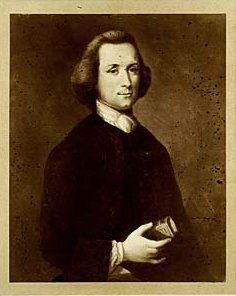
Priestley, painted late in life by Rembrandt Peale (c. 1800)

Priestley was buried at Riverview Cemetery in Northumberland, Pennsylvania.

Monday, 9 January 2017

Saint Paul

EARLY LIFE 

Saint Paul was born in the city of Tarsus–one of the largest trade centers on the Mediterranean coast likely between the years of 5 BC and 5 AD.

He was born into a devout and important Jewish family in Tarsus, where his parents were Roman citizens.

Schooling would have begun in a room attached to a synagogue. Then as a youth Paul was sent to a school of Rabbi Gamaliel of Jerusalem where he studied exegesis, Jewish dogma, traditional law and casuistry.

Paul spoke Aramaic, Hebrew, Greek and possibly Latin.

As a young man he was a strict Jew with a hatred of the new followers of the Christ sect, whom he persecuted with a great rage.

CONVERSION 

Paul was the most zealous, rigorous and careful of all Pharisees, one of the strictest Jewish sects. As a model Pharisee he persecuted the new religious sect called Christians until the risen Christ appeared to him and transformed him.

The Conversion of Saul, fresco by Michelangelo, 1542–45

After his conversion, Paul spent some time in Arabia studying and meditating on his new understanding of the Jewish scriptures before returning to Damascus where he was befriended by Barnabas and introduced to the apostles.

MINISTRY 

For eight or nine years little is known of Paul's activities, until around 46 AD when he set off on the first of three missionary journeys throughout the eastern Mediterranean European area. During these tours, Paul founded many churches.

Pauls four tours organizing the Christian Church were:
First Tour Cyprus, Pamphylia, Pisidia and Lycaonia.
Second Tour Phrygia, Galatia, Macedonia, Phillipi, Thessalonica and Athens.

Saint Paul delivering the Areopagus sermon in Athens, by Raphael, 1515.

Third Tour Ephesus, Macedonia, Corinth, Aegean Islands.

Paul supported himself during his travels and while preaching, a fact he alludes to a number of times (e.g. 1 Corinthians 9:13-15); according to Acts 18:3, he worked as a tentmaker. He also had a Patroness named Phoebe.

Paul signaled the start of a break between Jews and Christians by abolishing the obligations of the Torah. This move made the new Christian faith more attractive to the majority of Gentiles.

in the 40s and 50s AD, Paul conducted what might be the first international aid project in recorded history, collecting donations from non-Jewish Christians in Greece and Asia Minor (Turkey) for the famine-ravaged people of Judea.

WRITINGS 

St Paul was the first man to give Christianity a systematic theology.

Paul wrote a number of letters to the churches he founded, which were highly valued and many were collected after his death.

Paul Writing His Epistles, painting attributed to Valentin de Boulogne, 17th century

His First Letter to the Thessalonians is the earliest Christian document known to exist.

By 100 AD St Paul's collected letters were already accepted on an equal basis with other scripture.

HEALTH 

Paul performed miracles of healing including raising a young man to life after he'd died in a fall. The youngster had fallen out of the third storey window after falling asleep during a long sermon by Paul.

The apostle, who was temporarily blinded when he was converted, suffered from what he called a "thorn in the flesh". It is thought he could be referring to poor or deteriorating eyesight.

In 63 AD Paul of Tarsus wrote to his younger missionary colleague Timothy who was having problems with stomach pains. The water Timothy was drinking was possibly contaminated so Paul instructed him to drink a little wine for his stomach. Earlier Paul had contrasted in a letter to Christians in Ephesus the adverse effects of getting drunk on wine with the positive effects of being filled with the Holy Spirit.

APPEARANCE 

His Roman name "Paul" means "little".

According to Acts 21 v 38, he was Egyptian looking.

A second century document refers to Paul as a man of less than impressive physical appearance, small, bald and bandy legged.

Bartolomeo Montagna - Saint Paul - Google Art Project

He would have had scars and other disfigurements from his many beatings.

PERSONAL LIFE 

When Paul's ship was wrecked off the Maltese coast, the centurion commanded that to save their lives, all the able to swim should do so. The fact that Paul reached the shore shows he was an efficient swimmer.

Paul wrote in 1 Timothy 4 v 8 that bodily exercise profits a little but godliness is profitable for all things. He did not mean that physical exercise has little value. Indeed he was acknowledging that there is a short term profit to it.

IMPRISONMENT 

In 58BC Paul was arrested in Jerusalem. The Jews attempted to kill him but succeeded only in having him arrested by the Roman authorities who kept him captive at Caesarea for two years. As Paul had appealed to Nero Caesar, they sent him to Rome where after two more years of captivity he was set free in AD63.

Acts describes Paul's journey from Caesarea to Rome in some detail. The centurion Julius had shipped Paul and his fellow-prisoners on a merchant vessel, on board which Luke and Aristarchus were able to take passage. At Myra in Lycia the prisoners were transferred to an Alexandrian vessel transporting wheat bound for Italy, but the winds being persistently contrary, Paul advised that they should spend the winter at a place in Crete called Goodhavens. His advice was not followed, and the vessel driven by the tempest drifted aimlessly for fourteen whole days, being finally wrecked on the coast of Malta.


February 8, 58, may be the day that Paul sailed from Malta for Rome. Pliny tells us in his Natural History that February 8 was the date Spring opened its seas to voyagers. If the sailors acted on the traditional date, we may actually have pinned down an exact moment in Paul's life.

DEATH 

Eusebius of Caesarea states that Paul was beheaded by a sword in the reign of the Roman Emperor Nero; this event has been dated either to the year 64, when Rome was devastated by a fire, or a few years later to 67, possibly on June 29, 67.

The Beheading of Saint Paul by Enrique Simonet, 1887

Tradition has it that he was beheaded at the place now called The Fontane, Rome and his body is buried where the Basilica of Saint Paul outside the wall stands.

Caius mentions in the late 2nd century both Peter and Paul's tombs being in Rome. He wrote: "I can point out the trophies of the apostles. "For if you are willing to go to the Vatican or to the Ostian Way, you will find the trophies of those who founded this Church."

In 2002, an 8 foot long marble sarcophagus, inscribed with the words "PAULO APOSTOLO MART" ("Paul apostle martyr") was discovered during excavations around the Basilica of Saint Paul on the Via Ostiensis. The sarcophagus was examined by means of a probe, which revealed small bone fragments. The bone was radiocarbon-dated to the 1st or 2nd century. According to the Vatican, these findings support the conclusion that the tomb is Paul's.

Source Christianity.com

Thursday, 29 December 2016

Blaise Pascal

EARLY LIFE 

Blaise Pascal was born on June 19, 1623 in Clermont-Ferrand, which is in France's Auvergne region.

Blaise Pascal Versailles. By unknown; a copy of the painture of François II Quesnel, Wikipedia Commons

He lost his mother, Antoinette Begon, at the age of three.

His father, Étienne Pascal (1588–1651), was a local judge and member of the "Noblesse de Robe," who also had an interest in science and mathematics.

Blaise Pascal had one older sister Gilberte, and two younger sisters, only one of whom, Jacqueline, survived past childhood.

Beginning in 1631, his father devoted himself entirely to the education of his son, who showed extraordinary mental and intellectual abilities, occasionally taking him along to the Academy of Science meetings.

CAREER 

At the age of 16, Blaise Pascal produced a short treatise on what was called the "Mystic Hexagram", and sent it to Père Mersenne in Paris, which included some of the great mathematical thinkers of the time The hypothesis, which is known today as Pascal's theorem, states that if a hexagon is inscribed in a circle (or conic) then the three intersection points of opposite sides lie on a line (called the Pascal line).

In December 1639 the Pascal family left Paris to live in Rouen where Étienne had been appointed as a tax collector for Upper Normandy.

In 1641, while helping his father collect taxes in central France, young Pascal built a calculating machine, the Pascaline, operated by gears and wheels. Though it could only count, not multiply or divide and was not a commercial success, the Pascaline is considered a pioneering forerunner to the later development of mechanical methods of calculation, as well as the modern field of computer engineering.

Early Pascaline on display at the Musée des Arts et Métiers. By Rama, Wikipedia

In 1646, Pascal learned of Evangelista Torricelli's experimentation with barometers. The French scientist built an early form of a barometer, which instead of mercury, used red wine. As wine is less dense than mercury he had to build a tube 46 feet to accommodate the pressure rises and falls.

Pascal questioned what force kept some mercury in the tube and what filled the space above the mercury. Following more experimentation in this vein, in 1647 Pascal proved to his satisfaction that a vacuum existed above the column of liquid in a barometer tube.

The philosopher Rene Descartes visited Pascal on September 23, 1647. During his stay, the pair argued about the vacuum which Descartes did not believe in. Afterwards, Descartes wrote a letter to Huygens in which he said that Pascal"...has too much vacuum in his head."


On September 19, 1648, Florin Périer, husband of Pascal's sister Gilberte, carried out a famous demonstration of atmospheric pressure at the top of Puy-de-dome, the highest mountain in the vicinity of Clermont-Ferrand. Périer measured the height of the mercury column at the lowest elevation in town, where a reading of 711 mm was taken. The other instrument was carried about 1000 metre higher to the top of the mountain, where the height of the column had dropped to 627 mm.

Pascal replicated the experiment in Paris by carrying a barometer up to the top of the bell tower at the church of Saint-Jacques-de-la-Boucherie, a height of about 50 metres. The mercury dropped about two lines. The fact-finding mission was vital to Pascal's theory concerning the cause of barometrical variations and paved the way for further studies in hydrodynamics and hydrostatics.


Pascal also paved the way for the invention of the hydraulic press by Joseph Bramah in 1795. The instrument was based upon the principle that became known as Pascal’s law which stated that the pressure in a fluid contained in a vessel remains the same in all directions regardless of the area to which the pressure is applied.

The Pascal, a SI unit of pressure, was named after Blaise Pascal in honor of his contributions to science in 1971. The Pascal is used to quantify internal pressure, stress. Young's modulus and ultimate tensile strength. It is defined as one newton per square meter.

Pascal made significant contributions to mathematics and published his Traité du triangle arithmétique ("Treatise on the Arithmetical Triangle") in 1653. The treatise described a convenient tabular presentation for binomial coefficients, an inverted pyramid of numbers in each was the sum of the two above it. This became known as the Pascal triangle.

Pascal's triangle

In 1654, Pascal was approached by a friend, an aggravated gambler called the Chevalier de Mere, who couldn't understand why he always lost when betting on the appearance of certain combinations in the fall of dice. Prompted by his friend, Pascal corresponded with the mathematician Pierre de Fermat on the subject of gambling problems. Their collaboration led to the development of the mathematical theory of probabilities, which helped de Mere calculate the odds on dice throws and win some money.

The important groundwork laid by Pascal and de Fermat proved to be instrumental in Gottfried Leibniz's formulation of calculus.

In 1661 Pascal proposed a public bus system in Paris and its suburbs. The eight seater coaches went into service the following year. They ran every eight minutes, but were not a success, finding it hard to negotiate the crowded medieval streets. The vehicles were also too small to arouse the public interest after an initial attraction. The company went into liquidation in 1676.

Roulette was invented by Pascal. It was a by-product of his experiments with perpetual motion.

BELIEFS 

In 1646, Pascal and his sister Jacqueline started identifying with the religious movement within Catholicism known by its detractors as Jansenism. Initiated by Cornelius Jansen, the former Bishop of Ypres, the Jansenism movement aimed at reforming the French Roman Catholic Church from within.

Portrait of Pascal

Pascal's interest in Jansenism was prompted by an incident one icy January day in 1646, when his father rushed out to prevent a duel from taking place. He slipped on the frozen ground, fell hard and dislocated his hip. Two devout Jansenists treated Étienne Pascal, curing him. As a result Blaise Pascal and his sister were drawn to the Scriptures and devoted many hours to the study of God's word.

In 1651 Étienne Pascal died and Jacqueline renounced the world by entering Port-Royal-des-Champs Abbey, a covent of Cistercian nuns in Magny-les-Hameaux, in the Vallée de Chevreuse. The abbeys and schools of Port-Royal were intimately associated with the Jansenist school of theology.

Despite living in a fine mansion and mixing with high society, Pascal was unhappy and unsatisfied. In desperation he turned to his Bible and in the late hours of November 23, 1654, after reading the 17th chapter of the Gospel of John he had a profound mystical vision.

After his conversion experience, Pascal inscribed his testimony on a piece of parchment which he sewed onto his coat. For eight years Pascal hid this story of his salvation sewing and unsewing as he had need. After he died a servant found it. The parchment in his jacket read:

"The year of Grace 1654, Monday Nov 23rd... from about half past ten in the evening until half past 12, God of Abraham, God of Isaac, God of Jacob, not of the Philosophers and Scholars. Certainty, feeling, joy and peace God of Jesus Christ... I have separated myself from him, I have fled from him, renounced him, crucified him, may I never be separated from him... renunciation total and sweet. "

Pascal used to drive around Paris in a magnificent four horse drawn coach. In 1654 he was involved in an accident at the Neuilly bridge where the horses plunged over the parapet but the carriage survived. This near death experience is thought to have influenced his conversion.

After his mystical experience, Pascal took refuge in the Jansenist Catholic Monastery of Port Royal under the influence of his sister.

On March 24, 1656, Pascal's 10-year-old niece, Marguerite Périer, was healed of a painful incurable eye affliction by a Jansenist. The healing made a great impression on the public and all Catholic Paris acclaimed a miracle. Pascal regarded the event as a sign of divine favor for the cause of Jansenism. It also confirmed his belief in miracles, a belief that would later be incorporated his great apologetic work the Pensées.

Marguerite Périer 

WORKS 

Blaise Pascal wrote Lettres Provincales under the pseudonym of Louis de Montalte –The first of the lettres was published on January 23, 1656.


Lettres Provincales is made up of 18 letters and pamphlets that were written in an ironic and humorous style in which he attempted to bring deep theological matters to the attention of the masses. In his 18-letter series Pascal criticized the Jesuits, promoted Jansenist teaching and put forward the argument that whilst true faith only belongs to the morally upright God's grace is sufficient for all. "There is a God shaped vacuum in every heart," he wrote.

The traditionally Catholic Louis XIV was incensed about this pro-Jansensist work. The French king ordered that the book be shredded and burnt in 1660.

In 1658 Blaise Pascal set out to prepare a defense of the Christian religion. It was unfinished at the time of his passing, but he left a series of notes which were discovered and were published in 1670 as Pensées. A classic of literature and apologetics, Pascal stated in Pensées that God could be known through Jesus Christ by an act of faith itself given by God.

Pensées contains 'Pascal's wager' which states the French polymath's that belief in God is rational by illustrating a friend waging on extinction after death. Pascal reasoned if he is wrong in his belief in eternal life he will never know but if his friend is wrong in his belief in extinction he will all too definitely know and will lose the opportunity of eternal happiness.
Second edition of Blaise Pascal's Pensées, 1670

FINAL YEARS, DEATH AND LEGACY 

Pascal had poor health, especially after the age of 18, and by the 1650s he was becoming ill from overwork.

In June 1662, Pascal was seized with a violent illness, probably stomach cancer, and after two months of agony, he realized he didn't have much longer to live and requested he could die with the poor in the hospital for incurables. His last words were "My God, Forsake me not.”

Pascal died on August 19, 1662 just two months after his 39th birthday. He was buried in the cemetery of Saint-Étienne-du-Mont.

Pascal's epitaph in Saint-Étienne-du-Mont, where he was buried

In 1972 a biopic titled Blaise Pascal was shown on French TV, The seemingly uninspired director Roberto Rossellini said it was about, "A very boring man."

Sources Sunday Telegraph, Thefamouspeople.com, Church History in Plain Language by Bruce L Shelley