Search This Blog

Showing posts with label Space. Show all posts

Tuesday, 8 January 2019

Universe

The Universe is the name that we use to describe all of space and its contents. It comprises billions of stars and planets and enormous clouds of gas separated by a gigantic empty space.

PHYSICAL PROPERTIES AND COMPOSITION

There are close to 50 billion galaxies in the observable universe, each comprising somewhere around 100 billion stars orbiting the galaxy's center of mass.

2014 Hubble Team Unveils Most Colorful View of Universe Captured by Space Telescope 

There are ten times more stars in the night sky than grains of sand in the world's deserts and beaches.

It is estimated that the diameter of the Universe is at least 93 billion light years, or 8.80 ×1026 metres

The universe is expanding, with the galaxies moving apart from each other (as revealed by the red shift in their light).

Humans can only see about 4% of the matter in the Universe. The rest (about 23%) is made up of invisible matter (called Dark Matter) and a mysterious form of energy (73%) known as Dark Energy.

The brightest things in the universe are quasars, which can be over 4,000,000,000,000 times brighter than our sun.

GRB 080319B was a gamma-ray burst (GRB) detected by the Swift satellite at 06:12 UTC on March 19, 2008. The explosion occurred about 7.5 billion years ago setting a new record for the farthest object that was observable with the naked eye. It remained visible to human eyes for approximately 30 seconds.

ESO artist's impression of gamma-ray burst GRB 080319B

A galaxy 13.4 billion light years away was spotted by the Hubble Space Telescope in 2016 breaking the record for the furthest thing that humans had seen. The light from the galaxy, named GN-z11, came just 400 million years after the universe began.

Approximately 73% of everything in the universe is in the form of hydrogen. Helium makes up about 25% of the mass, and everything else represents only 2%.

The average color of the universe is "Cosmic latte," a light beige.

The cosmological constant governs the expansion rate of the universe. If it varied from its actual value by one part in ten to the power of 120 (1 with 120 zeros after it) then the universe would have expanded too rapidly for anything to form or collapsed back on itself.


The hottest place in the universe is a cluster of galaxies called RXJ1347; it was discovered in 2009 by the Japanese telescope Suzaku and has a constant temperature of 300 million Celsius degrees.

A cloud of gas and dust formed from a dying star, called the Boomerang Nebula, is the coldest place in the universe, at minus 272c (minus 457.6f). Also known as the bow tie nebula, it is 5,000 light years away from Earth and was discovered in 1995.

Scientists searching for an explanation for an unusually cool area of sky instead discovered a 'supervoid'; an empty spherical blob 1.8 billion light years across that is the largest object in the known universe. The supervoid is not an actual vacuum, as its name suggests, but has about 20% less stuff in it than our part of the universe – or any typical region. An estimated 10,000 galaxies were “missing” from the part of the sky it sits in.

The lowest musical note in the known universe is caused by the rumbling of a black hole in the Perseus galaxy - 57 octaves below middle C.

HISTORY

The universe is thought to have originated in an immense explosion called The Big Bang.

After the big bang only hydrogen and helium along with trace amounts of lithium and beryllium were created. The other 86 elements found in nature were all created by nuclear reactions inside stars.

The ancient Egyptians regarded the spherical onion bulb as a symbol of the universe.

Some ancient Greeks believed that the Universe has infinite space and has existed forever. They thought it had a set of spheres which corresponded to the fixed stars, the Sun and various planets. The spheres circled about a spherical but unmoving Earth.

Aristarchus's 3rd century BC calculations on the relative sizes of, from left to right, the Sun, Earth, and Moon

Aristotle, the Greek philosopher was the first western man to argue that the universe owes its existence to an intelligent being, that is to say God.

Nicolaus Copernicus maintained in his revolutionary book On the Revolutionary of Heavenly Bodies that the Earth revolves round the Sun rather than the then established teaching that the Earth is at the center of the universe. Published in 1543, it was hugely controversial at the time, and was fought long and hard by authorities of the Christian church.

In 1632 Galileo Galilei published Dialogue on Two Chief World Systems, which updated Copernicus' theories about the Earth not being at the center of the universe. The following year, The Inquisition summoned Galileo to Rome where he was cross-examined and threatened with torture. The Roman Catholic Church argued "The doctrine that the Earth is neither the center of the Universe, nor immovable, but moves, even with a daily rotation is absurd and both philosophically and theologically false and the least an error of faith".

The French philosopher René Descartes was in the middle of writing The World, a book on the universe in which he accepted the views of Copernicus, when he heard that Galileo had been condemned for believing with Copernicus that the sun was the center of the universe and not the earth. Descartes decided to abandon the work.

Descartes applied certain methods of mathematics to science, teaching that the universe is explainable in mathematical terms. For the French philosopher the universe was a mechanical system activated by God, the first cause of all motion.

Below is a Model of the Copernican Universe by Thomas Digges in 1576, with the amendment that the stars are no longer confined to a sphere, but spread uniformly throughout the space surrounding the planets.


Isaac Newton published Principia Mathmaticia in 1687. The book set out laws which showed the Universe to be divinely ordained and set the foundation of the science of mechanics. Newton explained that gravitational force was responsible for controlling the motions of the celestial bodies.

Albert Einstein's theory of general relativity describes how spacetime is curved and bent by mass and energy (gravity).  In 1919 that prediction was confirmed by Sir Arthur Eddington during the solar eclipse of May 29th.

Einstein later introduced an extra term into his equations, the cosmological constant, to balance out gravity and produce a static universe that is neither expanding nor contracting. However, the German-born theoretical physicist had failed to notice that his theory predicted an expanding universe. Five years later, in 1922,  the Russian mathematician Alexander Friedmann discovered that Einstein had made an elementary algebraic error that caused him to overlook a solution to his own equations. Einstein had divided by zero at one point in his calculations, a mathematical impossibility. Friedmann then introduced the idea of an expanding universe that contained moving matter.

Though Albert Einstein came from a family of non-active Jews, he admitted, "Everyone who is seriously involved in the pursuit of science becomes convinced that a Spirit is manifest in the laws of the universe. A Spirit vastly superior to that of man and one in the face of which we modest powers feel humble."

Once when Albert Einstein was visiting Mount Wilson observatory in California with his wife Elsa, Mrs Einstein pointed to a complex piece of equipment and asked its purpose. The guide said that it was used to determine the shape of the universe. "Oh" she said not at all impressed. "My husband uses the back of an old envelope to work that one out."

The Big Bang theory was formulated in 1927 by Georges Lemaitre (July 17, 1894 – June 20, 1966), a Belgian Roman Catholic priest, In a May 9, 1931 letter to Nature journal Lemaître wrote: "If the world has begun with a single quantum, the notions of space and time would altogether fail to have any meaning at the beginning; they would only begin to have a sensible meaning when the original quantum had been divided into a sufficient number of quanta. If this suggestion is correct, the beginning of the world happened a little before the beginning of space and time."

Georges Lemaitre was also the first to present the idea of an expanding universe, derived from General Relativity and later known as Hubble's law.

Portrait of Georges Lemaître. Wikipedia

American astronomer Edwin Hubble (1889-1953) was the first to confirm that the universe is expanding.

We are currently in the Stelliferous Era, which in the grand scale of the universe is the age where stars are created throughout the universe. Eventually all stars will burn out, and we will enter the Black Hole Era followed by the Dark Era, where there is no longer any light in the universe.

Sunday, 23 December 2018

UFO

An unidentified flying object (UFO) is any light or objects seen in the sky whose immediate identity is not apparent. Even though UFOs can be anything, people often use the word UFO when they are talking about alien spacecraft.

Photograph of an alleged UFO in Passaic, New Jersey, taken on July 31, 1952

HISTORY

The first reported unidentified flying object (UFO) sighting took place in the 15th century BC, in Ancient Egypt.

In 214BC, the Roman historian Livy reported seeing "ships in the sky."

There was a mass sighting of a large black triangular flying saucer-type object over Nuremberg, Germany on April 14, 1561. A broadsheet news article printed later in the month describes how around dawn on that day, residents of Nuremberg saw what they described as an aerial battle, followed by the appearance of a large black triangular object and then a large crash outside of the city. According to witnesses, the broadsheet claims  there were also hundreds of spheres, cylinders and other odd-shaped objects that moved erratically overhead.

Many skeptics claim the phenomenon was likely to have been a sun dog, an atmospheric optical phenomenon that consists of a bright spot to one or both sides of the Sun.

The broadsheet

The world’s earliest sighting of a UFO from an airplane occurred on January 30, 1916, when a British pilot near Rochford, Essex, reported seeing a row of lights, resembling the lighted windows on a train carriage, that rose up into the sky and disappeared.

Finnish observers reported in 1946 the first sightings of unidentified flying objects known as "ghost rockets", which have not yet been positively identified.

The term 'flying saucer' has been used since 1947. This followed a sighting of nine flying objects by pilot Kenneth Arnold in June 1947, whose motion he likened to a saucer skimmed across water.

The first significant UFO sighting was reported on July 8, 1947, when various news agencies recounted the capture of a "flying disc" by U.S. Army Air Force personnel in Roswell, New Mexico. The military later stated that what was actually recovered was debris from an experimental U.S. Air Force high-altitude surveillance weather balloon. 

Over the years, the Roswell incident has become one of the most famous and controversial UFO cases, with numerous conspiracy theories and debates surrounding what exactly happened. The incident was later a feature of the hit sci-fi TV series The X-Files, starring David Duchovny.

In 1994, the U.S. Air Force released a report titled "The Roswell Report: Fact Versus Fiction in the New Mexico Desert," which concluded that the debris recovered in 1947 was indeed part of a top-secret research project to monitor Soviet nuclear testing. The report aimed to debunk the UFO claims and provide a plausible explanation for the incident. However, the Roswell UFO incident remains a subject of interest and speculation for many UFO enthusiasts and conspiracy theorists.

Roswell Daily Record, July 8, 1947, announcing the "capture" of a "flying saucer"

On January 7, 1948 Air National Guard pilot Thomas Mantell fatally crashed his P-51 Mustang after being sent in pursuit of an UFO near Fort Knox, Kentucky. Mantell's aircraft crashed under circumstances that remain unclear. Some accounts suggest that he may have blacked out due to lack of oxygen at high altitudes, while others speculate about the possibility of Mantell pursuing a large, metallic balloon. The incident remains one of the more famous early UFO-related events in the United States, and it is often discussed in UFO folklore and investigations. The official conclusion by the U.S. Air Force was that Mantell's encounter was likely with a skyhook balloon,.

The term 'UFO' for Unidentified Flying Object was coined by US Air Force officer Edward Ruppelt in 1952.

In 1954, the mayor of Châteauneuf-du-Pape in France banned flying saucers from his territory.

In 1969 The United States Air Force closed its study of UFOs, Project Blue Book, stating that sightings are generated as a result of "A mild form of mass hysteria, Individuals who fabricate such reports to perpetrate a hoax or seek publicity, psychopathological persons, and misidentification of various conventional objects."

A local farmer Renato Nicolaï reported a UFO sighting in Trans-en-Provence, France on January 8, 1981, which was claimed to be "perhaps the most completely and carefully documented sighting of all time".
He saw a saucer-shaped object about eight feet in diameter land about 50 yards (46 m) away at a lower elevation. Nicolaï claimed the object took off almost immediately, rising above the treeline and departing to the north east. It left burn marks on the ground where it had supposedly sat.


On May 7, 1988, the U.S. city of Boston held the world's first convention for people who said they had been abducted by aliens.

FUN UFO FACTS

The countries of France, Italy and Chile have all formally recognized the existence of UFOs.

The first country to depict flying saucers on its postage stamps was Equatorial Guinea in 1975.

More than 40,000 Americans have taken out insurance against being abducted by aliens.

Studies have established that the majority of UFO observations are misidentified conventional objects or natural phenomena—most commonly aircraft, balloons, clouds, or astronomical objects such as meteors or bright planets.

Pixiebay

Over the past 40 years there has been a daily average of about six reported UFO sightings. These occur most often on Fridays, in the West, during drinking hours.

Source Daily Express

Friday, 15 June 2018

Supernova

A supernova is when a huge star explodes. It usually happens when its nuclear fusion cannot hold the core against its own gravity. The core collapses, then there's one final, titanic explosion. This causes the sudden appearance of a "new" bright star, before slowly fading from sight over several weeks or months. 

The picture below shows SN 1994D (bright spot on the lower left), a supernova outshining its home galaxy, NGC 4526.

By NASA/ESA, 

The word 'supernova' was coined by Walter Baade and Fritz Zwicky during 1931 lectures held at The California Institute of Technology, then used publicly in 1933 at a meeting of the American Physical Society.

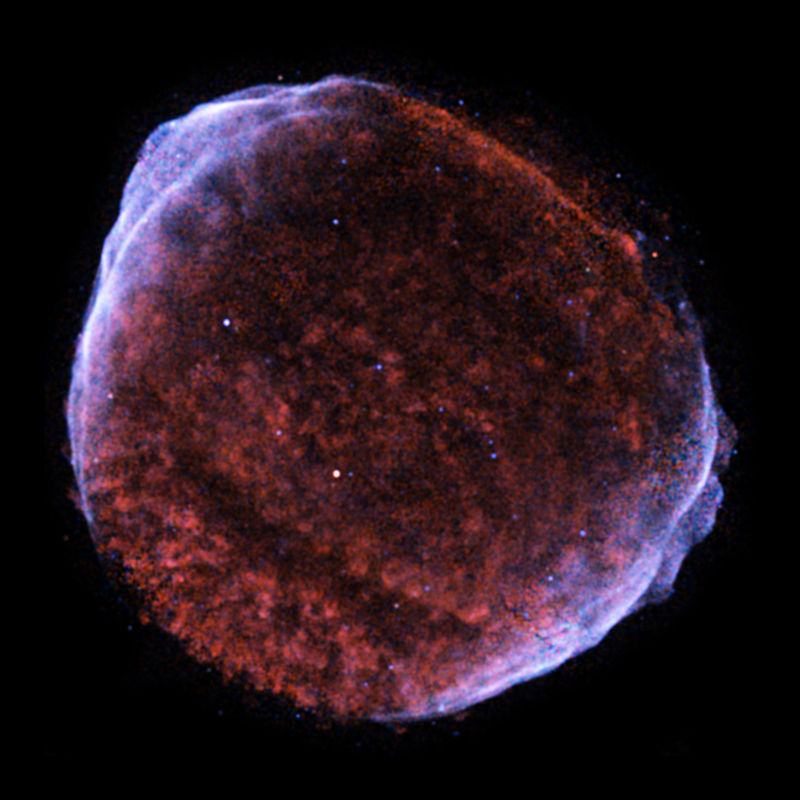
The supernova SN 1006 first appeared in the constellation Lupus and was widely seen on Earth beginning in the year 1006. It occurred 7,200 light years away. It was, in terms of apparent magnitude, the brightest stellar event in recorded history, reaching an estimated −7.5 visual magnitude, and exceeding roughly sixteen times the brightness of Venus. The supernova's remnant was not identified until 1965.

SN 1006 supernova remnant

A supernova was seen by Chinese, Arab, and possibly Amerindian observers near the star Zeta Tauri in 1054. Chinese astronomers recorded it as a "guest star" on July 4th. For several months it remained bright enough to be seen during the day. Its remnants form the Crab Nebula.

The last supernova observed in our Milky Way galaxy was in the year 1604.  The astronomer Johannes Kepler began observing SN 1604 at its peak on October 17, 1604, and continued to make estimates of its brightness until it faded from naked eye view a year later. 

Kepler's supernova was so bright, it could even be seen during the day for three weeks.

Picture below shows Johannes Kepler's original drawing from De Stella Nova (1606) depicting the location of the supernova, marked with an N (8 grid squares down, 4 over from the left)


SN 1987A was a supernova in the Large Magellanic Cloud, a dwarf satellite galaxy of the Milky Way, around 168,000 light-years from Earth and was the closest observed supernova since Kepler's Supernova in 1604. Light and neutrinos from the explosion reached Earth on February 23, 1987, and it was the first supernova that modern astronomers were able to study in great detail, and its observations have provided much insight into core-collapse supernovae. 

ASASSN-15lh is a superluminous supernova that was detected by the All Sky Automated Survey for SuperNovae (ASAS-SN) in 2015 in the southern constellation Indus. The discovery, confirmed by ASAS-SN group with several other telescopes, was formally described and published on January 15, 2016. 

ASASSN-15lh is the most luminous supernova ever detected; at its brightest it was at least 20 times brighter than the whole Milky Way, with an energy hundreds of billions times greater than the Sun.


When a supernova unleashes a gamma ray burst, it releases as much energy in a few seconds as our sun will release in its entire lifetime.

The brightest extrasolar event witnessed on Earth was a gamma-ray burst (GRB) detected on October 9, 2022. This burst, nicknamed the "Boater" event, was so intense that it saturated most of the world's gamma-ray detectors. It occurred approximately 2.4 billion light-years away and lasted for several hundred seconds. The Boater event was at least 10 times brighter than any previously observed GRB, making it the most powerful cosmic explosion ever recorded.

The Boater event was likely triggered by the formation of a black hole, which released a massive amount of energy in the form of gamma rays. This energy traveled through space for billions of years before reaching Earth, where it was detected by satellites and telescopes. The event was so bright that it could be seen with the naked eye, even though it occurred billions of light-years away

Supernovas are the source of many of the chemical elements heavier than hydrogen and helium in the universe.

Traces of radioactive iron-60, a strong indicator of supernova debris, is buried in the sea floor right across the Earth.

Sunday, 10 June 2018

The Sun

The Sun is the star at the center of the Solar System around which the Earth and other planets orbit.

The Sun by By Geoff Elston - Society for Popular Astronomy

45% of Americans are unaware that the sun is a star.

HISTORY

The Ancient Greeks portrayed the god Helios as driving the chariot of the sun across the sky each day to earth-circling Oceanus and through the world-ocean back to the East at night.

The Trundholm sun chariot pulled by a horse (below) is a sculpture believed to be illustrating an important part of Nordic Bronze Age mythology. The sculpture is probably from around 1350 BC. 

By Nationalmuseet, Wikipedia

It was the Greek philosopher Anaxagoras who suggested that the Sun is not the chariot of the god Helios.

Anaxagoras was also the first to explain that the Moon shines with light reflected from the Sun.

Recent research suggests that the first recorded observation of a sunspot may date back to ancient China. According to the Book of Han, an official history of the Han Dynasty, Chinese astronomers made an intriguing observation in 28 BC. On May 10 of that year, they documented that "the sun was yellow at its rising and a black vapor as large as a coin was observed at its center." 

LOCATION AND SIZE 

The Sun is by far the largest entity in the solar system containing 99.8% of its total mass.

The Earth could fit on the sun one million times over.

The Sun completes an orbit of the Milky Way galaxy about once every 225 million years.

Illustration of the Milky Way, showing the location of the Sun

On this orbit, it travels at a speed of about 220km (140 miles) per second.

The Sun is 20 “years” old- it's completed 20 orbits around our galaxy's center since it first sparked to life.

The Sun is 400 times further from the Earth than the Moon, but the Moon is 400 times smaller than the Sun, making the two bodies appear the same size in the sky.

If you could drive from Earth to the Sun constantly at 75 mph, it would take about 141 years.

COMPOSITION

The Sun is made up of about a billion billion billion tonnes of mostly hydrogen gas.

Although the surface temperature of the Sun is approximately 5,778 K (5,505 °C, 9,941 °F), its core can reach 15,000,000 °C.

The surface of the sun, contains cell-like “kernels,” each about the size of Texas, that carry heat from inside the sun to the outside.


The reason the Sun is hot is that it contains a lot of mass. All that mass weighing down on the core squeezes it and makes it very hot. 

The sun's atmosphere — a.k.a. the corona — is over 20 times hotter than the solar surface and scientists have no concrete explanation why.

CHARACTERISTICS 

The Sun is the most perfectly round natural object known in the universe. It is so round that its polar diameter differs from its equatorial diameter by only 10 kilometres (6.2 mi).  Its near-perfect sphere is because the Sun is a giant ball of gas, and gravity pulls all of the gas towards the center of the Sun. The Sun's rotation also helps to keep it round. As the Sun rotates, it bulges out slightly at the equator, but this bulge is very small.

The Sun's round shape is important because it helps to keep the Sun stable. If the Sun were not round, it would be more likely to collapse under its own gravity. The Sun's round shape also helps to distribute its heat evenly throughout the solar system.

The image of the Sun below reveals the filamentary nature of the plasma (extremely hot ionized gases) connecting regions of different magnetic polarity.

Taken by Hinode's Solar Optical Telescope on 12 January 2007

The sun loses about 6 million tons of mass every second due to nuclear fusion and the solar wind. Despite losing that much material, it has only lost about 0.05% of it's original mass over the past 4.5 billion years.

It takes light from the sun approximately 8 minutes and 20 seconds to reach Earth.

The color of the Sun is a composite of all visible frequencies of light which makes it perfectly white. We see it yellow because of the Earth's atmosphere. In space the sun looks white. 

The Sun produces a roar so loud that, if space were to be filled with air, it would create a sound of 125dB on Earth; 92.96 million miles away: around the volume of a jackhammer.

For perspective: a sound of 130dB would cause physical pain.

The sun's core is so hot that a piece of it the size of a pinhead would give off enough heat to kill a person 160 kilometres (99 miles) away.

Even the coolest places on the Sun's surface are hot enough to melt every compound that humans have ever found or created.

Sunbeams, or crepuscular rays, are always parallel to each other—they just look like they're meeting at the sun because of perspective.

Most stars exist in binary or triple star systems. It is hypothesized that up to 85% of stars are gravitationally bound to another star in a multiple star system. Therefore, solitary stars (such as the Sun) are actually not the norm in the universe.

Wednesday, 25 April 2018

Star

A star is a luminious globe of gas, producing its own heat and light by nuclear reactions. Stars are held together by gravity.

The nearest star to Earth is the Sun.

False-color imagery of the Sun

HISTORY 

Before the telescope was invented, various ancient and medieval scientists counted the number of stars. Tycho Brahe counted 777, Johannes Kepler reached 1005 and Ptolemy put the number at 1,056.

A supernova is when a huge star explodes. It usually happens when its nuclear fusion cannot hold the core against its own gravity. This causes the sudden appearance of a "new" bright star, before slowly fading from sight over several weeks or months.

The supernova SN 1006 first appeared in the constellation Lupus and was widely seen on Earth beginning in the year 1006. It occurred 7,200 light years away. It was, in terms of apparent magnitude, the brightest stellar event in recorded history. The supernova's remnant was not identified until 1965.

SN 1006 supernova remnant

William Cranch Bond and John Adams Whipple took the first photograph of a star other than the Sun on July 17, 1850. The star was Vega, and the photograph was taken at Harvard College Observatory. The photograph was a daguerreotype, which is a type of early photographic process. Daguerreotypes are made by exposing a silver-plated copper plate to light. The light causes the silver to react and create a negative image. The negative image is then developed and fixed, creating a positive image.

The photograph of Vega is very faint, but it is still visible. It is a significant achievement, as it was the first time that a star other than the Sun had been photographed.

American astronomer Annie Jump Cannon (December 11, 1863 – April 13, 1941) manually classified more stars in a lifetime than anyone else, around 350,000 stars. She could classify a single star, fully, in approximately 20 seconds, and used a magnifying glass for the majority of the (faint) stars.

On May 9, 1922, the International Astronomical Union formally adopted Annie Jump Cannon’s stellar classification system. With only minor changes having been made since, it is still the primary system in use today.
RECORDS 

The Sun, at apparent magnitude of −27, is the brightest object in the sky.

Sirius (sometimes called the Dog Star) is the brightest star in the night sky. It is a binary star system in Canis Major, near Orion. It has an apparent magnitude of −1.46. Sirius is about twice as massive as the Sun and has an absolute magnitude of 1.42. It is 25 times more luminous than the Sun.

American astronomer Alvan Graham Clark first observed the faint white dwarf companion of Sirius on January 31, 1862.  The white dwarf can be seen to the lower left in the picture below.

Hubble Space Telescope image of Sirius. By By NASA, ESA, H. Bond , and M. Barstow

HD 140283 is a subgiant star about 190 light years away from the Earth in the constellation Libra. It is thought to be the oldest known star, being nearly as old as the universe itself.  Once dubbed the "Methuselah Star" by the popular press due to its age, the star must have formed soon after the Big Bang.

Earendel, discovered in 2022  is the most distant individual star detected at 12.9 billion years from Earth. However, due to the expansion of the universe, the star is now 28 billion light-years away.

MACS J1149+2223 Lensed Star-1, also known as Icarus, is a blue supergiant observed through a gravitational lens is the second most distant individual star detected, at 9 billion light-years from Earth (redshift z=1.49; comoving distance of 14.4 billion light-years; lookback time of 9.34 billion years). The light observed from the star was emitted when the universe was about 30% of its current age of 13.8 billion years.

Alpha Centauri is the closest star system to the Solar System, being 4.37 light-years from the Sun. It consists of three stars: Alpha Centauri A and Alpha Centauri B, which form the binary star Alpha Centauri AB, and a small and faint red dwarf, Alpha Centauri C.

Alpha Centauri (left) and Beta Centauri (right) . By Skatebiker 

A car traveling 100 mph would take more than 29 million years to reach Alpha Centuri.

UY Scuti is a red supergiant and pulsating variable star in the constellation Scutum approximately 9,500 light-years from Earth. It is the largest known star by radius with an estimated radius of 1,708 solar radii (1.188×10⁹ kilometres); thus a volume nearly 5 billion times that of the Sun. If placed at the center of the Solar System, its photosphere would at least engulf the orbit of Jupiter. Light takes 110 minutes to travel from one side to the other.

It would take 1,200 years to fly around UY Scuti in a 900km/h regular passenger airplane. If Earth was in its habitable zone, it would take 10.000 years for one full rotation, each season lasting 2500 years.

Neutron star PSR J1748-2446 is the fastest spinning celestial object in the universe. The star rotates 716 times every second, so its equator moves at about 25% the speed of light. It is also 50 trillion times the density of lead and has a magnetic field a trillion times stronger than the Sun’s.

The star Kepler 11145123 is so perfectly spherical that it's the roundest natural object ever measured.

FUN STAR FACTS

The average number of stars we can see with the naked eye is around 10,000. This number is only the 0.000004% of all stars in the Milky Way galaxy.


There are more stars in space than there are grains of sand on every beach on Earth.

Because it takes so long for their light to reach Earth, many of the stars you see at night are long gone.

A white dwarf is the final evolutionary stage of a star like our sun, where it has exhausted all its nuclear fuel and lost most of its mass. White dwarfs are extremely dense, with a mass similar to that of the sun but with a radius of only a few thousand kilometers (or a few thousand miles). They cool over time and eventually become black dwarfs.

A black dwarf is a theoretical stellar remnant, which no longer emits significant heat or light. But none are known to exist, because the universe is not old enough for any white dwarfs to have cooled to the point of becoming black dwarfs. The age of the universe, estimated to be around 13.8 billion years, is not sufficient for any star to complete the process of cooling and becoming a black dwarf.

Over time, theoretically, a white dwarf star will dwindle to a black dwarf – but given the time this takes to happen and the age of the universe this shouldn't have actually happened to any yet.


NASA discovered 14 stars that were cool enough to touch in 2010.

Source Medium

Saturday, 17 March 2018

Spacewalk

On March 18, 1965 Russian cosmonaut Alexey Leonov became the first person to walk in space. Leonov went outside the Soviet spacecraft Voskhod 2 for 12 minutes, tied to the ship by a 50-foot tether.

Alexei Leonov performs the first spacewalk.

During the first space walk in human history Alexei Leonov perspired so much that the sweat was sloshing around in his suit.

While performing his space walk in human history, Alexey Leonov’s spacesuit inflated so much that he had problems re-entering the ship. Lenov had to let air out of his suit while still in the vacuum of space and got temporary stuck sideways when going back in  through the airlock. The Russians did not try another space walk until four years later.

In 1985, Leonov was a founder member of the Association of Space Explorers, open only to those who have completed an orbit of Earth in space.

Although the USSR was first to do it, the Americans had coined the term 'extra-vehicular activity' (EVA) for a space walk in the early 1960s.

Ed White was the first American to take a spacewalk, when on June 3, 1965, he flew into space as pilot of Gemini 4. White was tethered to the spacecraft during his 21 minute spacewalk, and his oxygen was supplied through a 25-foot (7.6 m) umbilical cord, which also carried communications and biomedical instrumentation. He was the first to control his motion in space with a Hand-Held Maneuvering Unit, which worked well but only carried enough propellant for 20 seconds.

Ed White performs the first American spacewalk

Michael Collins, the command module pilot for Apollo 11, was the first person to perform two spacewalks in a single mission during the 1966 Gemini 10 flight. 

On November 13, 1966, Edwin "Buzz" Aldrin became the first astronaut to successfully work in space without tiring, during the Gemini 12 flight. (Previous astronauts suffered from fatigue carrying out tasks during EVA). Aldrin worked outside the Gemini craft for 2 hours and 6 minutes, demonstrating that astronauts could work outside their transport.

Aldrin's interest in scuba diving inspired the use of underwater EVA training to simulate weightlessness, which has been used ever since to allow astronauts to practice techniques of avoiding wasted muscle energy.

Usually astronauts are connected to the spacecraft through an umbilical cable; Untethered spacewalks were only performed on three missions in 1984 using the Manned Maneuvering Unit (MMU), and on a flight test in 1994 of the Simplified Aid For EVA Rescue (SAFER), a safety device worn on tethered U.S. EVAs. Astronauts Bruce McCandless II and Robert L. Stewart performed the first untethered spacewalk during the Space Shuttle Challenger mission STS-41-B on February 7, 1984.

Untethered U.S. astronaut Bruce McCandless uses a manned maneuvering unit

In 2008, China became the third country to conduct a successful space walk.

Space shuttle STS-102 crew members Susan J. Helms and James S. Voss performed the longest ever spacewalk (8 hours 56 minutes) on March 11, 2001. The spacewalk was conducted outside the International Space Station.  During the spacewalk, the astronauts were able to accomplish a number of important tasks, including the installation of new equipment for the station's robotic arm, the deployment of a new radiator for the station's cooling system, and the testing of a new camera system for future spacewalks.

Soviet/Russian astronaut Anatoly Solovyev holds the record for most spacewalks by a single person (16) and most hours spent on spacewalks (82).

Astronauts attach pieces of Velcro into their helmets to scratch their noses during space walks.

Astronauts' fingernails can fall off during space walks, due to the material and internal pressure of their gloves.

Source Daily Express

Spaceflight

A V-2 /A4-rocket became the first man-made object to reach space on June 20, 1944. Launched at Peenemünde, Germany, it reached an altitude of 189 km (117 miles).

The first living beings to venture into space were fruit flies, which were launched aboard a suborbital V-2 rocket flight by the United States on February 20, 1947. The flies were successfully recovered alive.

Albert II, a male rhesus macaque monkey, made history as the first primate and mammal to journey into space. On June 14, 1949, he embarked on his emission from Holloman Air Force Base in New Mexico, United States. Accompanied by a U.S. V-2 sounding rocket, Albert soared to an altitude of 83 miles (134 km). However, tragedy struck upon re-entry when a parachute failure caused Albert's capsule to collide with the ground at high velocity, resulting in his demise. Nonetheless, valuable data on Albert's respiratory and cardiovascular functions were collected until the fateful impact.

The Alamogordo Guided Missile Test Base, in collaboration with Holloman Air Force Base, coordinated Albert II's groundbreaking flight. This endeavor followed the unfortunate loss of Albert I, who tragically perished prior to a planned mesospheric flight reaching a height of 39 miles (63 km) aboard a V-2 rocket on June 11, 1948. Lessons learned from Albert I's experience prompted the redesign of the capsule, addressing the cramped conditions that had affected his ill-fated journey.

The Soviet space program launched the world's first artificial satellite Sputnik 1 on October 4, 1957. Sputnik 1 was a small, spherical spacecraft that orbited the Earth. Its successful launch marked the beginning of the Space Age and represented a major scientific and technological achievement for the Soviet Union. 

Laika, the dog was the first living creature to orbit the earth when he occupied the Soviet satellite, Sputnik 2. Laika died when Sputnik's air supply ran out; no provision had been made for recovering the craft.

Miss Able and Miss Baker, two rhesus monkeys, were part of a historic space mission conducted by NASA in 1959. They were the first animals to survive a space mission and return safely to Earth. The mission, known as "Jupiter AM-18," was launched on May 28, 1959, from Cape Canaveral, Florida.


The spacecraft carrying Miss Able and Miss Baker was a Jupiter IRBM (Intermediate Range Ballistic Missile) modified to serve as a test vehicle for NASA's space program. The monkeys were placed in a specially designed capsule located at the top of the rocket. The mission aimed to study the effects of space travel on living organisms and gather valuable data to prepare for human spaceflight.

After reaching an altitude of approximately 300 miles (482 kilometers), the spacecraft returned to Earth and safely landed in the Atlantic Ocean. A recovery team retrieved the capsule and its precious passengers. Miss Able, the older of the two monkeys, unfortunately died a few days after the mission due to an anaesthetic overdose during a post-flight medical procedure. However, Miss Baker, the younger monkey, survived and lived for several more years, becoming a celebrity in her own right.

The successful return of Miss Able and Miss Baker marked a significant milestone in space exploration, demonstrating that living beings could withstand the physical stresses of space travel and return safely. 

A new federal non-military space agency The National Aeronautics and Space Administration (NASA) was established by the National Aeronautics and Space Act on July 29, 1958. it was signed into law, in response to the Soviet space program's launch of the world's first artificial satellite.

Major Yuri Gagarin became the first man to travel in space on April 12, 1961. He was 27 when he made a 108-minute orbital flight in his Vostok 1 spacecraft.

Vostok I capsule on display at the RKK Energiya museum. By SiefkinDR 

A chimpanzee named Ham became the first great ape sent into space on January 31, 1961. Ham traveled 158 miles above the Earth in the Mercury-Redstone-2 space capsule.

John Glenn became the first American to orbit the Earth when he traveled around the planet three times in the Mercury spacecraft Friendship 7 in 1962.

The Soviet Voskhod 1 mission in 1964 was the first multi-person space flight as well as the first without spacesuits.

The Soviet spacecraft Soyuz 1 crashed in Siberia during its return to Earth in 1967, killing cosmonaut Vladimir Komarov. He was the first human to die during a spaceflight.

The crew of Apollo 10 (Thomas Stafford, John Young and Gene Cernan) reached a speed of 39,897 km/h in May 1969, the fastest ever attained by humans.

In April 1970, the crew of NASA's Apollo 13 mission (James Lovell, Fred Haise and John Swigert) swung around the far side of the moon putting them 248,655 miles (400,171 km) away from Earth. This held the record for furthest that humans have ever been from their home planet for 56 years.

The crew of Apollo 13 photographed the Moon as they passed by it.

Soviet spacecraft Venera 7 successfully landed on Venus in 1970. It was the first successful soft landing on another planet and the first spacecraft to successfully transmit data from the surface of another planet.

In 1971 The Soviet Soyuz 11 spacecraft suffered an uncontrolled decompression during re-entry, killing cosmonauts Vladislav Volkov, Georgiy Dobrovolskiy and Viktor Patsayev—the only human deaths to occur in space.

Launched in 1972, Pioneer 10 was the first spacecraft to travel through the asteroid belt between Mars and Jupiter and to make up-close observations of Jupiter, capturing images that were later sent back to Earth. It passed the orbit of Neptune, the furthest planet from the Sun at the time, on June 13, 1983 becoming the first man-made object to leave the central Solar System.

The Voyager engineers calculated over 10,000 launch windows so that encounters between the craft and the planets on its trajectory didn't happen during Thanksgiving or Christmas, allowing them to stay home for the holidays.

Artist's conception of the Pioneer 10 spacecraft

Russian Valeri Polyakov left Earth on the January 8, 1994 Soyuz TM -18 flight, to be a doctor-cosmonaut on the Mir space station. He would stay on the space station until March 22, 1995, setting a record 437 day long spaceflight.

When Valeri Polyakov landed after his 437-day mission, he insisted on walking the short distance from the capsule to a nearby chair to prove that humans could physically function on the surface of Mars after a long transit through space.

NASA lost a $125M Mars orbiter in 1999 due to confusion in working with both imperial and metric systems. The mistake occurred because Lockheed Martin engineers used English (inch, ft) measurements in their calculations in contrast to NASA’s metric (cm, m) calculations.

NASA's robotic space probe Voyager 1 crossed the heliopause on August 25, 2012, making it the first spacecraft to do so. The heliopause is the boundary between the solar system and interstellar space. It is where the solar wind, the stream of charged particles from the Sun, meets the interstellar medium, the gas and dust between stars.

The NASA space probe New Horizons flew by the trans-Neptunian object Arrokoth on January 1, 2019, making it the farthest object visited by a spacecraft.

The record for the farthest distance traveled by humans is 252,760 miles (406,771 km) from Earth, achieved by the Artemis II crew on April 6, 2026.  During a lunar flyby, the Orion spacecraft (named Integrity) swung around the far side of the Moon. Because the Moon was near its farthest point from Earth (apogee) and the spacecraft's trajectory took it roughly 4,111 miles beyond the lunar surface, the crew eclipsed the long-standing record set by Apollo 13 in 1970 by several thousand miles.

Wait Calculation is a dilemma stating that during an interstellar mission, humanity would easily find ways to increase travel speed greatly, meaning any new expeditions would arrive much earlier. Therefore, no-one would risk wasting their lives on such a meaningless trip.

Spacecraft

A V-2 /A4-rocket became the first man-made object to reach space on June 20, 1944. Launched at Peenemünde, Germany, the MW 18014 crossed the Kármán line reaching an altitude of 189 km (117 miles).

Soviet spacecraft Sputnik 1 became the first artificial satellite to orbit the Earth, when it was launched in 1957 by an R-7 rocket from the Baikonur Cosmodrome near Tyuratam, Kazakh SSR.

The first manned spacecraft was Vostok 1, which carried Soviet cosmonaut Yuri Gagarin into space in 1961, and completed a full Earth orbit.

The Soviet Union launched Voskhod 1 on October 12, 1964, becoming the first spacecraft to carry a multi-person crew. It was also the first flight without the use of spacesuits, and the first to carry either an engineer or a physician into outer space. Voshkod 1 also set a manned spacecraft altitude record of 336 km (209 mi).

Surveyor 1 landed in Oceanus Procellarum on the Moon, in 1966 becoming the first U.S. spacecraft to soft land on another world.


Surveyor NASA lunar lander

The Soviet space probe Venera 3 crashed on Venus in 1966 becoming the first spacecraft to land on another planet's surface.

In 1967 the Soviet space probe Venera 4 performed in-place analysis of the environment of Venus and became the first spacecraft to land (rather than crash land) on another planet, although it stopped working before that.

The Soviet Zond 5 spacecraft landed in the Indian Ocean on September 21, 1968, after circling the Moon. It was the first spacecraft to safely return to Earth after completing a lunar flyby. The Zond 5 spacecraft was carrying a variety of scientific instruments, including cameras, telescopes, and dosimeters. It also carried a biological payload that included two tortoises, fruit fly eggs, and plants. The tortoises and the other biological organisms survived the flight and were returned to Earth safely.

The American space probe, Mariner 9, becomes the first spacecraft to orbit another planet successfully in 1971, swinging into its planned trajectory around Mars.

NASA's spacecraft Mariner 10 went into the record books for two distinct feats. It was the first spacecraft to use interplanetary gravity fields as a sort of gravitational slingshot. It was also the first space mission to visit two planets. Launched in late 1973, Mariner 10 first flew to Venus and then, using Venus' gravity to modify its trajectory, swung around to visit Mercury.

Launch of Mariner 10

Helios 2, a venture between NASA and the West German space agency which was launched in 1976, is the fastest ever spacecraft, having reached 252,792 km/h (157,078 mph). Helios 2 is no longer functional, but still orbits the sun. .

The International Cometary Explorer (ICE) spacecraft was launched August 12, 1978, into a heliocentric orbit. Thought to be shut down in 1997, it was actually discovered in 2008 still be fully operational with plenty of fuel. Through efforts of crowd funding and approval from NASA, a group successfully established contact and fired the engines for the first time since 1987.

The space shuttle embarked on its first mission in 1981. The first partially reusable orbital spacecraft, it was launched by the USA on the 20th anniversary of Yuri Gagarin's flight, on April 12, 1981.

Japan launched the Hiten spacecraft on January 24, 1990, the first lunar probe launched by a country other than the Soviet Union or the United States.

NASA's 2001 Mars Odyssey is currently the longest-surviving continually active spacecraft in orbit around a planet other than Earth. It launched from Cape Canaveral on April 7, 2001, on a Delta II rocket and reached Mars orbit on October 24, 2001. By December 15, 2010, it broke the record for longest serving spacecraft at Mars, with 3,340 days of operation. The spacecraft is currently in a polar orbit around Mars with an altitude of about 3,800 km or 2,400 miles. It has enough propellant to function until 2025.

Scaled Composites' SpaceShipOne was a reusable suborbital spaceplane that carried pilots Mike Melvill and Brian Binnie on consecutive flights in 2004. It won the Ansari X Prize for private spaceflight, by being the first private craft to fly into space.

In 2002, PayPal co-founder Elon Musk established the California-based space transportation company SpaceX. Six years later SpaceX launched its first ever private spacecraft, the Falcon 1 into orbit.

With the second launch of the SpaceX Dragon, in 2010 SpaceX became the first privately held company to successfully launch, orbit and recover a spacecraft. Dragon, was launched on a Falcon 9 rocket from Cape Canaveral.


The area code for Cape Canaveral in Florida is 321 to mimic the countdown sequence of space craft launches.

The Russian Soyuz series of spacecraft has been in continual use with the same basic design since the launch of Soyuz 1 on April 23, 1967. It is widely considered the world's safest, most cost-effective human spaceflight vehicle. At least one is always docked at the ISS at all times for use as an escape craft.

ESA's Gaia spacecraft, which is mapping the locations of roughly one billion stars, observes on average around 5,000 stars each second.

Spacecraft cemetery is the oceanic dumping ground where spaceships go to die. The area is roughly centered on Point Nemo in the South Pacific — the location farthest from any land. The defunct space station Mir and six Salyut stations are among those that have been ditched there.