Search This Blog

Showing posts with label Music. Show all posts

Tuesday, 27 August 2019

YouTube

Three former PayPal employees Chad Hurley, Steve Chen and Jawed Karim launched the popular website YouTube, where individuals and companies can upload, view and share videos.

From left to right: Chad Hurley, Steve Chen, and Jawed Karim. By Composite image by user:Ianmacm,

Steve Chen had worked at Facebook for a few months before quitting to set up YouTube in 2005 with Chad Hurley and Jawed Karim.

YouTube's first headquarters sat above a pizzeria and Japanese restaurant in San Mateo, California.

YouTube's early headquarters in San Mateo By Coolcaesar 

Three key experiences inspired the YouTube founders. Karim had had trouble finding footage online of Janet Jackson's Super Bowl wardrobe malfunction and, later, of the Indian Ocean tsunami in 2004. And Hurley and Chen had difficulty sharing a video shot at a dinner party in San Francisco in 2005.

The domain name YouTube.com was activated on February 14, 2005 and the site was developed months after.

The site as it appeared a few months after its launch By Source (WP:NFCC#4), 

Jawed Karim was the first person to upload a video onto the YouTube. The film entitled Me At The Zoo was uploaded on April 23, 2005 at 20:31. The 19-second video was shot by Karim's high school fiend Yakov Lapitsky and shows the YouTube co-founder at the San Diego Zoo. It has racked up over 70 million views as of June 2019.


During the summer of 2006, YouTube was one of the fastest growing sites on the World Wide Web, hosting over 65,000 new video uploads.

Google bought the YouTube site on November 13, 2006 for US$1.65 billion; YouTube now operates as one of Google's subsidiaries. It was a bold move for Google at the time, as YouTube was still a relatively new and unproven company.

Google has invested heavily in YouTube since the acquisition, and the platform has grown significantly as a result. Today, YouTube is the world's largest video-sharing website, with over 2 billion active users. It is also a major source of revenue for Google, generating over $28 billion in advertising revenue in 2022.

Peter Oakley, known as Geriatric1927 on YouTube, was the most subscribed YouTube account in 2006. In his channel he talked about his life experiences, such as growing up in the United Kingdom during World War II and experiencing the British interwar school system. Oakley passed away in 2014 at 86 years old.

Justin Bieber was discovered by chance when he was 12. His mom uploaded a video to YouTube of him singing in a talent contest, intending it just for his family. However, when music executive Scooter Braun clicked on it he was immediately impressed and signed him up.


The music video for PSY's "Gangnam Style" forced YouTube into an upgrade after it broke the video-sharing website's hit counter. Once PSY's tune reached 2,147,483,647 views, the maximum positive value for a 32-bit signed binary integer in computing, the view-counter could no longer work.

For three years, the music video for Luis Fonsi's "Despacito" was the most-watched clip of all time on YouTube. It became the first on YouTube to receive three billion, four billion, five billion and six billion views on August 4, 2017; October 11, 2017; April 5, 2018; February 24, 2019, respectively. Pinkfong's children's song "Baby Shark Dance" overtook "Despacito" as the most viewed video on YouTube on November 2, 2020, when the clip hit 7,042,967,886 views. 

The crown for the most disliked YouTube video of all time belongs to "YouTube Rewind 2018: Everyone Controls Rewind," a compilation video created by YouTube itself. This 2018 effort amassed a whopping over 20 million dislikes before YouTube made the dislike count private. The negative reception stemmed from viewers perceiving it as out of touch with what the YouTube community enjoyed.

Kenyan javelin thrower Julius Yego, who won silver at the 2016 Rio Olympics, learned how to throw properly by watching YouTube videos.


The word "YouTuber" was officially added to the Oxford English Dictionary in 2016.

As of 2018, China and North Korea both were permanently blocking accessing YouTube.

As of August 2018, the YouTube website was ranked as the second-most popular site in the world, according to Alexa Internet.

Monday, 12 August 2019

Xylophone

The xylophone is a musical percussion instrument comprising a number of wooden bars of varying length arranged in rows over resonators to produce sounds when struck with hammers.

Pixiebay

Often confused with its cousin the marimba, the xylophone has thick, hardwood bars and elicits much sharper, shorter notes, so the two instruments are often used together for a more varied tone.

No one really knows the xylophone's origins. Although they are present in the traditional music of Melanesia, Southeast Asia, Europe, Africa, and more, its birthplace and date remain a mystery. In 1511, it was called "wooden clatter" and later a "straw fiddle" in Europe.

The East African log xylophone  has bars lying on banana stems resting on the ground with no resonators below the bars. It was imported into Europe in the late 15th century where the xylophone bars were laid out on straw in four rows (instead of today's two rows). This practice continued for over 300 years but today the xylophone is often identified by its piano-esque appearance.

The xylophone is actually interchangeable with the marimba in Latin America, and has been used in Guatemala since before the 17th century.

The xylophone first became known in the western world in the early 19th century, and its first significant orchestral appearance was in Camille Saint-Saƫns' "Danse Macabre" (1874).

Orchestral xylophone (left) and marimba (right) By Spiritia,

It wasn't until the 20th century that the xylophone became as important to classical music as it was to musicals.

In Senegal, xylophones have been used as part of initiation ceremonies, played by young girls and boys. Among other practical uses, it was also used to scare birds, monkeys, and other pests out of the gardens.

Today's xylophones are usually made of hardwood, but can also be constructed from other types of wood, including maple or even bamboo. However, you're likely to get a much different sound depending on what type of wood you use.

The xylophone is often used to to effect the sound of clanking bones, making it as relevant in a Halloween movie as in jazz.


Sources The Grove Dictionary of Musical Instruments, Compton's Encyclopedia

Saturday, 25 May 2019

Whistle

THE INSTRUMENT 

A whistle is an instrument which uses a stream of gas (usually air) to make a sound. Whistles vary in size from a small slide whistle or nose flute type to a large multi-piped church organ.


At the turn of the eighteenth century, a cylindrical, drinking vessel with a hinged lid for ale or beer, was widely used in Europe and colonial America. On the handles of many of these tankards were whistles that were baked into their rims or handles. When the customer needed a refill, they blew the whistle to be served. The phrase "wet your whistle" comes from this.

Before the introduction of the whistle in the early 1870s, soccer referees indicated their decisions by waving a white handkerchief.

Before whistles were introduced, ice hockey referees used a cowbell. They had to switch to whistles when fans started bringing their own cowbells to disrupt game play.

The whistle used for the opening match at every Rugby World Cup is the one used by Welsh referee Gil Evans for an England versus New Zealand match in 1905.

In 1971, young phone hacker John Draper discovered a way to gain free minutes for long-distance, AT&T calls. He would blow a toy ‘Captain Crunch' whistle, which had the same 2600-hertz tone that indicated a trunk line was ready to be put through, and gain access to additional minutes.

THE SOUND 

Whistling is a common way to attract someone's attention because it produces a loud and distinctive sound that is easy to hear from a distance. This makes it an effective way to communicate with someone who may be too far away to hear your voice or other sounds.

Crafty Romans used to put holes into their slingshot stones in order to scare their opponents by making them whistle and ensure victory.

A whistle is a shrill sound made by forcing the breath through the contracted lips or the teeth. Human whistling unaided by any instrument can be used for musical recreation or a whistled language for communication over distances too great for articulate speech.

The Whistling Boy, Frank Duveneck (1872)

A popular name for an English pub in the middle of the previous millennium was The Pig and Whistle. This originated from servants who were sent out to fetch a pig of ale. They were instructed to whistle as they walk to prevent them from taking some sips during their journey.

Hitler was a keen whistler; he would regularly whistle Disney's "Who's Afraid of the Big Bad Wolf?" - probably because of his "Wolf" nickname.

After Humphrey Bogart died in 1959 a small, gold whistle was placed in his coffin by his wife, Lauren Bacall. It was a reference to the famous line in the movie To Have or Not to Have when she says to him: "You know how to whistle, don't you? You just put your lips together and blow".

Here is a list of songs with whistling

ANIMAL WHISTLES 

Each dolphin creates early in its life its own unique vocal whistle that gives it an individual identity. Because each whistle is unique, dolphins are able to call to each other by mimicking the whistle of a dolphin they want to communicate with. It's the equivalent of calling each other by name.

Dolphins can recognize the distinct whistle of their old friends even after 20 years of being separated.


The groundhog habitually gives a warning whistling when it sees a predator. They also whistle during the courtship season in spring.

The blue whale can produce can produce loud whistling calls that reach up to 188 decibels. The noise can be detected over 500 miles (800 km) away.

Sunday, 31 March 2019

Waltz

The Waltz is a dance in 3/4 time (3 beats for every bar of music). It was derived from an old Austrian-German peasant dance, the Landler, which was popular in Bohemia, Austria, and Bavaria, and spread from the countryside to the suburbs of Vienna.

The peasants of Bavaria, Tyrol, and Styria began dancing a dance called Walzer, a dance for couples, around 1750. Some people, however, found the dance undignified, and in 1760 the performance of the Walzer was banned by the church in parts of Germany.

The waltz became fashionable in Vienna around the 1780s and its gliding, whirling movements immediately became the rage throughout the entire population.


The waltz spread to many other countries in the years to follow. By the late 18th century waltzing was common in Paris and other European cosmopolitan cities. People felt the same spirit in the dance that they had perceived in the great political events of the day - the French and the American revolutions.

It's not hard to see to work out why the Viennese waltz set Europe alight. In early 19th-century society public displays of affection were limited to firm handshakes and the occasional blush. The dances of choice were all French, like the gavotte, cotillion and minuet. All of them were formal and distant-the closest they got to intimacy was, was the odd flick of the fingertips. The waltz stood for freedom of expression and freedom of movement. Unlike more courtly dances, with their restricted steps and predetermined poses, the waltz allowed the performers to sweep around the dance floor, setting their own boundaries and responsible to nobody but their partners.

For the first time a woman could dance with any man who asked you to-and not just dance, but be held by him. It was the first time ever that a man's body could legitimately be pressed against a woman's outside marriage.

What looked suspiciously like licensed canoodling suddenly found itself a staple of the grand ballrooms of Vienna then Europe and then the globe.


The waltz was brought to England from Europe by Napoleonic Wars soldiers. When the waltz was first introduced to English ballrooms, it was considered shocking due to the physical contact involved. Its entry in the Oxford English Dictionary shows that the waltz was considered "riotous and indecent" as late as 1825. The Victorian Ladies' Pocket Book of Etiquette devoted ten pages into denouncing the dance.

Nowadays, of course, the waltz is a perfectly respectable dance and we are used to seeing much closer intimacy between dancing couples. Something that shocks one generation becomes normal and acceptable in the next.


In 1831 FrƩdƩric Chopin left Poland for Vienna, where he found the Viennese just wanted to waltz. They weren't interested in his sort of piano music so he composed some Viennese Whirls (waltzes) himself.

Chopin's Waltz in D Flat Opus 64 no 1 (the theme to the BBC Just a Minute radio programme) actually lasts two minutes unless it's played at 78. Chopin originally named the piece "Petit chien" (Little Dog).

Johann Strauss II wrote over 400 waltzes, most notably "An der schƶnen blauen Donau" (better known to the English-speaking world as "The Blue Danube") In his lifetime, he was known as "The Waltz King", and was largely responsible for the ongoing popularity of the waltz in Vienna during the 19th century.


Antony Hopkins composed a waltz in 1964 that was only released years later. The famous actor was afraid that nobody would like it and therefore never got to hear it being played up until 2011 thanks to AndrƩ Rieu - a Dutch violinist who got sent the music sheets by Hopkins' wife.

815 Radio Times

Sunday, 24 March 2019

Walkman

Sony introduced the Walkman, the first portable audio cassette player on July 1, 1979. They called them "Walkman boogie-paks".

The first Walkmans went on sale for $150.


The corporation's chairman, co-founder, and chief executive officer, Akio Morita, otherwise known as Mr. Sony, had come up with the idea in response to the loud rock music his son and daughter played at home. The opera-loving chief asked his company's engineers to come up with a portable tape player that would be compact, lightweight, and capable of producing private but full stereo sound for one or two listeners through headphones which would give him access to all arias on plane flights.

The device that Sony's engineers came up with was a modification of a type of cassette recorder that journalists used. The story goes that Sony stuck a pair of headphones on to a cassette player for a test run on a golf course. Once it had realised how to make the headphones small and light enough (they used rare earth magnets) the Walkman was born.

Although Sony came up with the first popular personal stereo cassette player, the German-Brazilian Andreas Pavel had patented a similar device called the Stereobelt in 1977. Sony agreed to pay Pavel royalties, but refused to recognize him as the inventor of the personal stereo until a legal settlement in 2003.

When Sony first announced the Walkman they held an unusual press conference where different journalists were invited to Yoyogi, which is Tokyo's major park. They were each given a Walkman to prove that the portable player is fun and easy to use.

The original metal-cased blue-and-silver Walkman TPS-L2 was as big as a paperback book, and weighed 390 grams (14 ounces). It wasn't cheap, especially for those days, costing around ¥39,433.58 (or $150.00), or ¥57,109.02 (or $498.66) adjusted for inflation.

Original Sony Walkman TPS-L2 from 1979. By Binarysequence

Though Sony predicted the Walkman would sell about 5,000 units a month, people snatched it up and it sold more than 50,000 in the first two months.

Other names were initially tried for international markets like "soundabout" and "stowaway." Sony soon settled on Walkman. The original logo had little feet on the A's in "WALKMAN."

The Sony Walkman changed the way people listen to music and resulted in a boom in cassette sales. Despite a rash of imitations, the Walkman became the generic term.

In 1984, Sony launched the Discman series which extended their Walkman brand to portable CD products.

Sony sold its waterproof Walkman in a bottle of water to prove it was really waterproof.

Over the next 30 years they sold over 385 million Walkmans in cassette, CD, mini-disc and digital file versions, and were the market leaders until the arrival of Apple's iPod.


The word "Walkman" became so popular in the German language as a generic term for a personal stereo that in 2002 the Austrian Supreme Court ruled that any brand, not just Sony, could use that word to describe such a device.

Sony still continues to make cassette-based Walkman devices in China for the US and other overseas markets; however, they were discontinued in Japan on October 23, 2010.

Sources The Daily Mail, The Independent, Associated Press, The New Yorker

Sunday, 24 February 2019

Violinist

In 1555 the Italian musician Balthasar de Beaujoyeulx moved to Paris, where he became a servant at the court of Catherine de' Medici. At the time the violin was played in Italy but not in France. He became the first famous violinist when he introduced the instrument to the French court. Such was its popularity, the violin supplanted the lute as the stringed instrument of choice.

Roller-skates made their first recorded appearance at Carlisle House, London in 1760. Belgian inventor Joseph Merlin rolled into a party being held there while playing the violin wearing these first roller skates. It was not a successful introduction as the violinist crashed into a large mirror causing nearly a thousand dollars' worth of damage.

Mozart was a very fine violinist, though he often took the viola part when playing quartets. He composed five violin concertos for his own use.

Niccolo Paganini (October 27, 1782 – May 27, 1840), regarded by many people to be the greatest violin virtuoso ever, was so good that he was thought to be the son of the Devil or to have sold his soul for his talent. As a result, he was forced to publish his mother's letters to him in order to prove that he had human parents.

Portrait of young Paganini

Paganini was the fastest violinist ever. He was once recorded playing 12 notes per second.

When Franz Liszt attended a concert by Paganini in Paris, he was so awestruck by the violin virtuoso's skill, he became motivated to become the greatest pianist of his time.

In 1929 Otto E. Funk walked from New York City to San Francisco playing the violin for the whole journey.

An accomplished violinist, Albert Einstein played Bach and Mozart with feeling and insight and with an excellent sense of rhythm.

Einstein playing violin

Jack Benny (1894-1974) was a US comedian whose act featured him playing the violin badly for laughs. He'd learned the instrument as a child and when Benny performed his first serious concert, a critic wrote: "Last night Jack Benny played Mendelssohn, and Mendelssohn lost."


Larry Fine of the Three Stooges burned his arm with acid as a child. His parents gave him violin lessons to strengthen the damaged nerves. Fine became so proficient on the violin that his parents planned to send him to a European music conservatory but the plan was thwarted by World War I.

Yehudi Menuhin (1916-1999) was an American-born violinist, who adopted British nationality. He made his concerto debut in Berlin aged 13. Albert Einstein, who was in the audience, said with tears in his eyes: "The day of miracles is not over."

Leading concert violinist Joshua Bell, played for free, for 45 minutes, on a violin worth 3.5 million dollars at a subway station on January 12, 2007. Of the 1,097 people who passed by Bell, only seven stopped to listen him play, including a 3-year old boy, and only one person recognized him. The experiment was initiated by The Washington Post columnist Gene Weingarten.

Bell donned a baseball cap and played as an incognito busker at the Metro subway station L'Enfant Plaza in Washington, D.C. on January 12, 2007. T

The Guinness World Record for the fastest violinist is currently held by Ben Lee, who took 58. 515 seconds to perform Rimsky-Korsakov’s "Flight of the Bumblebee" at Norwood productions London, UK, on December 13, 2011.  Ben Lee, one half of electric string duo Fuse, has held the Guinness world record for fastest violinist several times.


The longest marathon playing the violin is 40 hours, 5 minutes, and 6 seconds, achieved by Ravi Chandulal Kotadiya from India. He performed this remarkable feat at the Swaminarayan Mandir in Vadtaldham, Gujarat, India, from May 2 to May 4, 2024, during which he played 1,513 songs.

Violin

The violin is a musical instrument played with a bow against a stretched string.


HISTORY

An instrument known to Egyptian civilization in the 2nd millennium BC was held with the strings almost horizontal and played with a plectrum, a forerunner of the modern-day bow. The number of strings on instruments of this period ranged between six and twelve.

The violin shares common ancestry with Middle Eastern, Indian and Chinese string instruments, all thought to have been derived from fiddles played by Mongolian horsemen and disseminated across Europe and Asia via the silk trade.

The violin in its present form emerged in early 16th-century northern Italy. The first makers of violins probably borrowed from various developments of the Byzantine lyra. such as the ravanastron, the rebec and the rabab, all played with bows.

The earliest pictures of violins, albeit with three strings, are seen in paintings by Gaudenzio Ferrari in northern Italy. In his Madonna of the Orange Tree, painted 1530, a cherub is seen bottom of center playing a three-stringed instrument which clearly has the hallmarks of a violin.

Gaudenzio Ferrari's "Madonna of the Orange Trees"

Through the mid-1500s in France, the lute was still the favourite instrument, but in 1555, Balthazar de Beujoyeux, the first famous violinist in history, brought a band of violinists to Catherine's de MƩdici's court and made violin music popular.

The French king Charles IX ordered Cremona-based lute-maker Andrea Amati to construct 24 violins for him in 1560. One of these instruments, the Charles IX, is the oldest surviving violin.

The look of instruments in the violin family became standardized in the late 16th century. By that time they shared a sound hole in their bodies shaped like a letter f, square shoulders, and a belly and back that protruded and projected past the ribs.

Stringed instruments became more popular through the innovations in design affected by the Amati and Guarneri families and by Antonio Stradivari, who began making violins as the Amatis' apprentice.

"Gould" violin (1693) By Antonio Stradivari -  Wikipedia

Arcangelo Corelli gave the violin a new emphasis in the concerto grosso--music for a small group of solo instruments playing in alternation with the full orchestra. Other composers for strings were Giuseppe Tartini, notable for the baroque solo sonata, and Antonio Vivaldi.

Dogfish skin was often used in the 18th century to sand violins.

The violin that was played by one of the musicians who stayed aboard as the Titanic sank in April 1912 was rediscovered in an attic. It was auctioned off by an anonymous buyer for $1.6 million in 2013.

FUN VIOLIN FACTS

The violin is the smallest and highest pitched string instrument.

A person who makes or repairs violins is called a luthier.

A single violin is made from over 70 individual pieces of wood, usually spruce or maple.


Playing the violin burns approximately 170 calories per hour.

The most expensive violin in the world was made by Giuseppe Guarneri in 1741 and was sold for over $16m (over £10m) in 2013. It had been played by Yehudi Menuhin among others. Its new owner anonymously donated the historic instrument to violinist Anne Akiko Meyers, on loan for the rest of her life.

The most expensive violin bow was sold for £200,000 in November 2015.

Here's a list of songs with a violin part.

Sources Daily Express, Classic FM, Compton's Encyclopedia

Wednesday, 26 December 2018

Ukulele

The ukulele is said to have been invented in 1879 in Hawaii. People got the idea from small 4-stringed guitar-like instruments known as cavaquinhos brought to the island by Portuguese immigrants, mainly from Madeira and the Azores.

Three hula dancers with ukulele. Wikipedia

Hawaiians gave the instrument its name, which means 'jumping flea'- a reference to the speed of the player's fingers on the strings. Legend attributes it to the nickname of the Englishman Edward William Purvis, one of King Kalākaua's officers, because of his small size, excitable manner, and quick fingered expertise on the cavaquinho.

Built from Hawaiian koa wood, ukuleles were popular among the Hawaiian royalty in the late 19th century. King Kalākaua was a patron of the arts and he incorporated the ukulele into performances at royal gatherings.

1893's World's Columbian Exposition in Chicago saw the first major performance of Hawaiian music with ukulele on the USA mainland.

Ernest Ka'ai, cited by some as being "Hawaii's Greatest Ukulele Player", wrote the earliest known ukulele method in The Ukulele, A Hawaiian Guitar and How to Play It in 1906.


By the mid 1910s, Hawaiian music had become a national craze, and the ukulele was incorporated into popular American culture soon afterwards. Millions of ukuleles were sold during the 1920s, and Tin Pan Alley publishers added ukulele chords to standard sheet music

Vaudeville performer Cliff Edwards (June 14, 1895 – July 17, 1971) was also known as Ukulele Ike, and was one of the best known ukulele players during the height of the instrument's popularity in the United States. Edwards taught himself to play ukulele to serve as his own accompanist (choosing it because it was the cheapest instrument in the music shop).

Cliff Edwards playing ukulele with phonograph, 1947
The highest paid entertainer and top box office attraction in Britain during the 1930s and 40s, George Formby, popularized the ukulele in the United Kingdom. He used one on songs such as "Leaning On A Lamp post." Formby also played the round-bodied banjolele.

Marilyn Monroe played the ukulele for her role in Some Like It Hot.


When Jimi Hendrix’s father saw his young son playing a simple kitchen broom, he bought him his very first musical instrument, which was a one-stringed ukulele.

George Harrison of The Beatles took up the ukulele and was said to have had one in every room of his home. A member of the Ukulele Society of Great Britain, Harrison played a ukulele solo in the style of George Formby at the end of "Free as a Bird".

Harrison gave a ukulele to Paul McCartney early on in their career and after leaving The Beatles, he composed several of his solo songs on the instrument including "Ram On."

Ukuleles commonly come in four sizes: soprano, concert, tenor and baritone.


Ukuleles are generally made of wood, though variants have been composed partially or entirely of plastic or other materials.

They normally have nylon strings or gut strings, which are usually tuned G, C, E, A' or A, D, F#, B.

Here is a list of songs with a ukulele

Sources Daily Mail, Blog-oup


Saturday, 24 November 2018

Trumpet

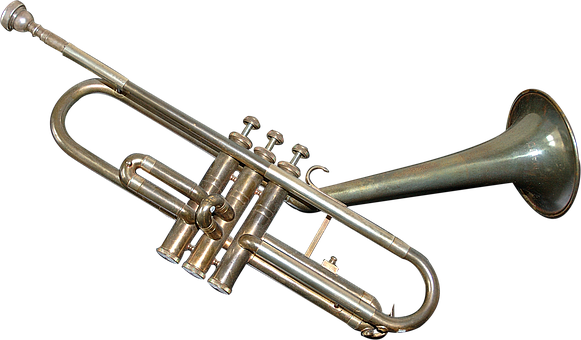
A trumpet is a brass wind instrument used mainly in classical music, jazz and military bands.

Pixiebay 


Early trumpets were tubes made of wood, bamboo, or gourd. In ancient Egypt trumpet like instruments were made of silver.

An early example of a brass instrument like a trumpet is called a shofar, made from a ram's horn. The shofar is still traditionally blown in the synagogue, at Rosh Hashana, the Jewish New Year festival.

The first event at the Olympic Games in 396 BC was a trumpet contest: the winner played the fanfare for all the other events.

The Moche people of ancient Peru depicted trumpets in their art going back to AD 300.

Ceramic trumpet. AD 300 Larco Museum Collection Lima, Peru. Wikipedia

The modern trumpet began to evolve around 1300 with the introduction of a metal instrument with a wide flared bell and short cylindrical bore. This was the first time they were used as musical instruments rather than as signaling devices in battle or religious worship. 

In the later 14th and 15th centuries the trumpet's tubing was shaped like the letter S rather than flared forward. This shape suggested an instrument that became known as the trombone.

From the late 15th century, trumpets were primarily been constructed of brass tubing, usually wound in a loop. Throughout the 16th, 17th, and 18th centuries this so-called natural trumpet - as opposed to later trumpets with valves or slides - was the norm. 

Trumpet, 17th century.

Trumpets with keys and with valves, which were capable of producing a wider range of notes and of sustaining more accurate pitch, were developed in the early 19th century, a time of transition for the instrument.  

The valves made it easier to play notes on the trumpet, bit it still is a difficult instrument to master. 

Although trumpets were built in many keys - trumpets in E flat, F, G, and A flat were not uncommon - by the end of the 19th century the standard trumpets were in the keys of B flat and C.


In old style jazz bands, the cornet was preferred to the trumpet, but from the swing era onwards, it's been largely replaced by the louder, more piercing trumpet. 

Pixiebay

The prolific jazz trumpeter Louis Armstrong learned to blow on a bugle in reform school when he was 13. In 1922 he went to Chicago to play second cornet with Oliver's Creole Jazz Band then with Fletcher Henderson's big band in New York City. He switched to the trumpet on theater dates because of its brighter sound and flashier look.

The American jazzman Dizzy Gillespie was known for playing a ‘bent’ trumpet. It started after two dancers fell on it, bending the bell upwards, and Dizzy liked the change in tone that resulted.

The phrase to "blow one's own trumpet," meaning to boast about one's achievements dates back to medieval times when dignitaries had a herald to share stories of their greatness. They started with the blowing of a horn to attract people's attention. 

Source Compton's Encyclopedia

Wednesday, 21 November 2018

Trombone

A trombone is a brass wind instrument which consists of a tube bent double, varied notes being obtained by an inner sliding tube. 

Usual sizes of a trombone are alto, tenor, bass and contra-bass.

Pixabay

HISTORY

Tyrtaeus, a seventh century BC ancient Greek lyric poet from Sparta, is credited with first introducing the slide, or the principle of elongating a brass instrument by tubes within tubes.

In the late 14th century the medieval trumpet had its straight shape folded into the curves of an S, and this shape suggested an instrument that became known as the trombone.

The word trombone is derived from Italian tromba (trumpet) and -one (a suffix meaning "large"), so the name means "large trumpet".

The earliest record of a trombone dates to the early 15th century. In Braunschweig, Germany, city records for 1403 indicate a salary payment of "2 shawms and a trombone." (2 piperen unde enen bassuner).

The first diagrammatic depiction of a trombone is Aurelio Virgiliano's Il dolcimelo (1600).

Early trombones were regularly used in groups with trumpets, where they were the lowest voice in the instrumental consort. 

The 17th-century trombone was built in slightly smaller dimensions than modern trombones, and had a bell that was more conical and less flared.

A tradition of music for these instruments continued into the 17th century, when music for trombones or sackbuts as they were known until c.1700, was internationally popular with such eminent composers as Giovanni Gabrieli, Heinrich Schutz, and Henry Purcell. 


Four sackbutts: tenor, alto, tenor, bass by Multimann

In the 18th century the trombone was often used for coloristic effects suggestive of majesty in church music and for supernatural scenes in opera. Mozart offered examples of such writing in his Requiem and in his opera Don Giovanni. 

In the 19th and 20th centuries the trombone became a regular member of the symphony orchestra. The first instance that a trombone was used in a concert symphony was in 1807 when the Swedish composer Joachim Nicolas Eggert specified trombones for his Symphony in E-flat major. The last movement of Beethoven's Fifth Symphony which followed a year later also features a trombone. 


Virtuoso passages for trombone occur in Hector Berlioz's Symphonie Fantastique,  Richard Wagner's Der Ring des Niebelungen, and Dimitri Shostakovich's Symphony No. 5.

There are just a few notable trombone soloists from the 19th century.  The group includes Germans C.T. Queisser and F.A. Belcke, and A.G. Dieppo from France. 

American big band leaders Glenn Miller and Tommy Dorsey were probably the most famous trombonists from the 20th century. Miller's mother worried about him playing the trombone so much. She said "Pop and I used to wonder if he'd ever amount to anything."

Glenn Miller

Frank Sinatra copied when singing Tommy Dorsey's breathing style when playing the trombone in order to hold notes for longer.

Today, trombones are prominent in orchestras, concert bands, marching bands, brass bands, big bands, swing bands and jazz ensembles.

FUN TROMBONE FACTS

German trombones from the late 19th and the early 20th centuries often carried a traditional mark of a pair of snakes dancing across the bell bow. These snakes are called, "Schlangenverzierungen."

The trombone is rarely heard as a solo instrument, apart from in some jazz music.


The trombone is the only brass instrument that uses a slide to alter pitches, rather than a valve. 

Sources Blog-oup, Europress Family Encyclopedia, Compton's Encyclopedia

Tuesday, 10 July 2018

Symphony

A symphony is an extended musical composition written for an orchestra to play. Usually it is divided into parts, generally three or four parts, which are called movements.

The word “symphony” literally translates as 'sounding together.' It comes from the Greek words “sym” (together) and “phone” (sound). 

Vancouver Symphony Orchestra with Bramwell Tovey. Wikipedia


The most prominent composer of the earliest symphonies was the Italian Giovanni Battista Sammartini (c. 1700 – January 15, 1775), who is especially associated with the formation of the concert symphony. Sammartini incorporated the fast-slow-fast movement structures to most of his symphonic works.

The most important symphonists of the latter part of the 18th century were Haydn, who wrote at least 107 symphonies over the course of 36 years and Mozart, with at least 47 symphonies in 24 years.

Beethoven, Schubert, Dvorak, and Mahler all died before completing a tenth symphony.

John Knowles Paine was a professor at Harvard University, occupying first chair of music in a U.S. university. His symphony, In Spring, which debuted in Cambridge, Massachusetts in 1880 was the first American symphony published in the United States.


Amy Beach's (1867-1944) Gaelic Symphony, premiered by the Boston Symphony in 1896, was the first symphony by an American woman.

Havergal Brian's Symphony No. 1, the 'Gothic', is the longest symphony in the world at an hour and three quarters. It has only been performed six times since it was finished in 1927. It requires 200 musicians and 800 singers, including brass bands, a children’s choir, and a machine that makes thunder sounds.

Over 8,000 pieces of music were secretly created in Nazi concentration camps. One prisoner composed an entire symphony on toilet paper using the charcoal given to him as dysentery medicine.

Thursday, 5 July 2018

Swing (music)

Swing Music is a combination of jazz and popular music, with a rhythmic and often repetitive beat. Swing is usually performed by dance bands having eight or more members, often accompanied by a vocalist and/or vocal group.

Wikipedia

The name swing came from the 'swing feel' where the emphasis is on the off–beat or weaker pulse in the music.

Swing music's genesis was the change from ragtime to jazz in the 1910s. Jazz took off with The Original Dixieland Jass Band 's recording of "Livery Stable Blues", which sold a million copies in 1917 and launched jazz as a national phenomenon in the US.

In 1923 Fletcher Henderson begins enlarging jazz ensembles, providing the foundation for swing music. The following year Louis Armstrong joined the Fletcher Henderson Orchestra, arguably the beginning of big band jazz music. 

The Fletcher Henderson Orchestra in 1925, with Louis Armstrong 3rd from left 


The growing popularity of jazz music in the 1920s was enhanced in places where prohibition was not enforced correctly and the speakeasies were very popular, especially in Detroit with the bootleggers. 

In 1925 Louis Armstrong left the Fletcher Henderson band and would add his innovations to New Orleans style jazz to develop Chicago style jazz, another step towards swing.

By the 1930s, Big band jazz had metamorphosed into swing. Swing was less improvised than big band jazz relying more on the written form.


In 1932, jazz composer Duke Ellington wrote "It Don't Mean a Thing, If It Ain't Got That Swing," a song that presaged the swing era.

In 1935, Benny Goodman's band ended a cross-country tour in Los Angeles. The tour was very disappointing, but when the band opened in Los Angeles, the youngsters went wild. They absolutely loved the music. It is the "official" start of the Swing Music era. 

Goodman with his band and singer, Peggy Lee, in the film Stage Door Canteen

The most famous swing bands rose to popularity in the 1930s and 1940s and included orchestras led by Benny Goodman, Artie Shaw, Glenn Miller and Count Basie. Their unprecedented success marked the peak of mainstream commercial emergence of swing music.

In 1938 the Archbishop of Dubuque, Francis J. L. Beckman, denounced swing music as "a degenerated musical system… turned loose to gnaw away at the moral fiber of young people", warning that it leads down a "primrose path to hell". His warning was widely ignored.


The great "Swing Era" started to die in the 1940s as the American Musician's Union disastrous strike, and the World War II years took their toll. In December 1946, 13-14 years after Benny Goodman officially started the swing era, the bubble broke. During that month, eight bands called it quits: Benny Goodman, Jack Teagarden, Ina Ray Hutton, Tommy Dorsey, Woody Herman, Harry James and Benny Carter, all disbanded their orchestras.

Tuesday, 13 March 2018

John Philip Sousa

John Philip Sousa was born in Washington, D.C. on November 6, 1854.

Sousa in 1900

John Philip was the third of ten children of João António de Sousa, who was of Portuguese and Spanish ancestry and his German wife Maria Elisabeth Trinkhaus. His father was a trombonist by profession who played with the Marine Band.

John Philip showed an early interest in music and started his music education by playing the violin as a pupil of John Esputa and George Felix Benkert for harmony and musical composition at the age of six. He was found to have absolute pitch.

Growing up in Civil War era Washington, John Philip heard, and was influenced by, the sounds of drummers and military bands.

His career as a performer began at age 11, when he played the violin in a dance band.

When he was 13 Sousa was offered a job as a musician in a circus, and tried to run away.  His father stopped him by signing the lad up to be apprenticed to the Marine Band, the official band of the president of the United States, instead. For five years he played with the Marine Band before taking up the violin again as a conductor of theater orchestras.

By the early 1870s Sousa writing his own music and conducting small orchestras in Washington

In 1876 he played in the orchestra of the French composer Jacques Offenbach at the Philadelphia Centennial Exposition. Sousa stayed on in Philadelphia throughout the late 1870s.

Sousa married Jane van Middlesworth Bellis (1862–1944). on December 30, 1879. They had three children: John Philip, Jr. (April 1, 1881 – May 18, 1937), Jane Priscilla (August 7, 1882 – October 28, 1958), and Helen (January 21, 1887 – October 14, 1975)

Appointed leader of the Marine Band in 1880, Sousa's Band, as it was called, achieved great popularity during many tours of the United States and Europe. Sousa directed the Marine Band until 1892.

A perfectionist, Sousa raised the level of performance and richness of instrumentation of the concert band. He took pride in conducting his band in full military uniform.

When Sousa left the Marine Band in 1892 to form his own orchestra, the news merited a front-page story in the New York Times.


Sousa and his newly formed civilian band, 1893

John Philip Sousa's stirring marches will survive as long as band music is played. He raised band music to a distinguished level, making it a very American musical form. During his 12 years as director of the United States Marine Band, Sousa composed Semper Fidelis (1888), The Thunderer (1889) The Washington Post (1889), South Africa March (1889), and Liberty Bell (1893). Altogether he composed about 140 military marches, earning him the title "March King."


In 1889, the Washington Post March, named after the newspaper, the Washington Post gave birth to the two-step in a metre, with a quick marching step with skips. It has remained as one of his most popular marches throughout the United States and is played regularly by marching bands at college football games.

Sousa's most famous work is "The Stars and Stripes Forever." In 1897 a statue of George Washington was unveiled in Philadelphia. To commemorate the occasion, John Philip Sousa’s march, The Stars and Stripes Forever, was performed. It was the first public performance for Sousa’s march and the President of the U.S., William McKinley, was in the audience.

The Stars and Stripes Forever was designated the official march of the United States in 1987.

Between 1879 and 1915 Sousa composed 11 comic operas, of which El Capitan and The Bride-Elect are the best known. Sousa also wrote two symphonic poems and invented the sousaphone, a large bass tuba with circular coiling and an upright bell.

Sheet music

When the Spanish-American War began in 1898 Sousa was appointed music director for the Sixth Army Corps.

During World War I Sousa enlisted in the United States Navy and took charge of the band training center at the Great Lakes naval base in Illinois. After the war he continued his band tours.

 "Nobles of the Mystic Shrine" was a march composed by John Philip Sousa upon the request of his nephew, A. R. Varela. It was first conducted with a band of around 6,200 members in June 1923, the largest band John Philip Sousa ever conducted.

In addition to his music Sousa wrote three novels and an autobiography, Marching Along, published in 1928.


Sousa died of a heart attack in his room at the Abraham Lincoln Hotel in Reading, Pennsylvania, on March 6, 1932, while on tour with his band. His death was national news, and he was mourned by people across the country.

He was given a hero's funeral. Sousa's funeral was held at St. Patrick's Catholic Church in Washington, D.C. on March 10, 1932, and was attended by and was attended by a large number of people, including President Herbert Hoover and many other dignitaries. A crowd of 50,000 people watched the procession, led by a riderless horse and a military band playing a funeral march composed by Sousa himself. 

He was buried in the Congressional Cemetery in Washington, D.C., and his grave is marked by a simple stone with the inscription "John Philip Sousa, Bandmaster, Musician, Composer."

Sources About.com, Compton's Encyclopedia