Search This Blog

Sunday, 19 January 2014

Edmund Cartwright

Edmund Cartwright (1743-1823)  was born in Marnham in Nottinghamshire  and was educated at Wakefield grammar school and Oxford University. In 1779 he became the rector of the parish of Goadby Marwood in Leicestershire.

He was the brother of Major John Cartwright, a political reformer and radical, and George Cartwright, explorer of Labrador.

During a visit to Cromford in 1784 Cartwright saw Richard Arkwright's cotton-spinning mills. These fascinated him, and he decided to construct a similar machine for weaving. The next year he created  a  rude contrivance, which with further improvements became the power-driven loom which was soon to replace its hand-operated forerunner.

In 1789 Cartwright patented a wool-combing machine. It lowered manufacturing costs, but he made little money from any of his inventions.

In 1790 Robert Grimshaw, of Gorton Manchester, erected a weaving factory at Knott Mill which he was to fill with 500 of Cartwright's power looms, but with only 30 in place, the factory was burnt down probably as an act of arson inspired by the fears of hand loom weavers.

Cartwright also pioneered an engine run on alcohol and notable improvements in rope-making and agricultural implements.

Fifty Lancashire firms sent a special memorandum to the then Prime Minister which resulted in Cartwright being awarded, in 1809, a grant of £10,000. He used the money to purchase a farm in Kent.

Sources Europress Family Encyclopedia 1999, Compton's Interactive Encyclopedia © 1998 The Learning Company, Inc, Wikipedia

Cartoon

In the late 17th century the word ‘cartoon’ was applied to any drawing on stout paper or card.

Benjamin Franklin was America's first political cartoonist. His "Join Or Die" was the first American newspaper cartoon. A drawing of a snake divided into eight parts, it was published in the Pennsylvania Gazette on May 9, 1754.  Its intention was to encourage the former colonies to unite against British rule,


The first newspaper cartoon in Britain was printed by George Townshend, later Marquis Townshend, in 1757.  The cartoon was titled “The Triumph of Caesar” and was published in the London Magazine, the Political Register, and the Town and Country Magazine. It depicted the Duke of Cumberland, Prince William, driving a farm cart containing turnips. The cartoon was critical of William’s focus on the alliance with Prussia during the Seven Year’s War in Europe at the neglect of British colonial interests in North America.

Punch was a British weekly magazine established in 1841. It featured the work of men like John Leech (1817-1864) whose humorous drawings were the first to be called cartoons

The first color cartoon in an American newspaper is thought to have been an April 2, 1893, George Turner cartoon in the New York Recorder.
"The Possibilities of the Broadway Cable Car" (1893), one of the first color cartoons in American newspapers

When Pennsylvania legislators pushed a bill banning caricatures of politicians as animals, cartoonist Walt McDougall (1858 – 1938) drew them as a tree, a beer mug, and assorted vegetables.

The teddy bear’s history began when President Theodore ‘Teddy’ Roosevelt, went on a hunt and refused to shoot an injured black bear. The story became the topic of a political cartoon by Clifford Berryman in The Washington Post on November 16, 1902. The cartoon of the event prompted a sweet shop owner, Morris Michtom, to put a couple of stuffed toys in his window, calling them ‘Teddy’s bears’. The toys were an immediate success and Michtom founded the Ideal Novelty and Toy Co.

The 1902 political cartoon in The Washington Post that spawned the teddy bear name.

The phrase 'Back to the drawing board,' meaning to start again on a new plan after the failure of an earlier one, originated as the caption to a cartoon produced by Peter Arno for the New Yorker magazine on March 1, 1941. It showed various military men and ground crew racing towards a crashed plane, and a designer, with a roll of plans under his arm, walking away saying: "Well, back to the old drawing board."

Carthage

Carthage was founded in 814 BC by Phoenician emigrants from Tyre, led by Princess Dido.

After the capture of Tyre by the Babylonians in the 6th century BC, Carthage became the natural leader of the Phoenician colonies in North Africa and Spain.

The Second Punic War between Carthage and the Roman Republic broke out in 218 BC. The Carthaginian general Hannibal marched an his army of 38,000 infantry and 8,000 cavalry over the Pyrenees and the Alps into Italy.

By Grandiosederivative work : Augusta 89 - Shepherd, William R. (1023).

The Carthaginians occupied much of Italy for 15 years, but a Roman counter-invasion of North Africa forced Hannibal to return to Carthage, where he was decisively defeated by Scipio Africanus at the Battle of Zama on October 19, 202 BC.

The Roman senator Cato the Elder (234 BC – 149 BC), took the threat of Carthage so seriously that he would end all of his speeches, no matter the subject, with the phrase, "And, further, I think that Carthage should be destroyed." On the contrary, his opponent Scipio Nasica, would end his speeches with "Moreover Carthage must be spared."

The population of Carthage before its destruction by the Romans in 146 BC is said to have numbered over 700,000.

The Romans refounded Carthage, which became the empire's fourth most important city and the second most important city in the Latin West.

The refounded Carthage became a centre of early Christianity. In 397 AD at the Council at Carthage, the biblical canon for the western Church was confirmed.

It remained one of the most important Roman cities until the Muslim conquest when it was destroyed a second time in 698.

Carthage was little more than an agricultural village for nine hundred years until the middle of the 20th century; since then it has grown rapidly as an upscale coastal suburb. In January 2013 it had an estimated population of 21,276.

In 1985 the mayors of Rome and Carthage signed a symbolic peace treaty to end the state of war between the two cities technically going back over 2100 years.

Sources Wikipedia, Hutchinson Encyclopedia © RM 2014. Helicon Publishing is division of RM.  

Jimmy Carter

Jimmy Carter was born on October 1, 1924, at the Wise Sanatorium in Plains, Georgia. He was the first US President that was born in a hospital.

His family had all been farmers for 350 years and no member of his father’s family had ever finished high school. Carter's childhood dream was "to go to the Naval Academy, get a college education, and serve in the U.S. Navy."

Carter was denied being selected high school class valedictorian because he skived off  to watch a movie.

Jimmy Carter married the former Eleanor Rosalynn Smith married on July 7, 1946  in Plains. He was 21, she was 18. The marriage canceled Rosalynn's plans to attend Georgia State College for Women, where she planned to study interior design.

The couple had four children: John William "Jack" (born 1947), James Earl "Chip" III (born 1950), Donnel Jeffrey "Jeff" (born 1952), and Amy Lynn (born 1967).

Amy Carter has been arrested four times: three times for protesting against Apartheid and once for protesting against CIA recruitment in college.

He served in the navy as a physicist until 1953, when Carter took over the family peanut business.

Jimmy Carter has flat feet. Rumor has it he rolled his arches over a Coke bottle everyday until they were curved enough to pass the physical for the United States Naval Academy.

He suffered radioactive urine for six months after stopping a nuclear meltdown in 1952 while working with the US atomic submarine program

Jimmy Carter entered politics in 1962 as a Georgia state senator, and in 1970 was elected governor.

Initially given little chance of winning during his 1976 presidential campaign, Jimmy Carter had an inauspicious debut,. In February 1975, the little-known governor from Georgia showed up in Des Moines, Iowa, to kick off his campaign for president. His team rented a hotel ballroom and bought enough food for 200 people. Only three showed up.

Jimmy Carter was considered such a long shot candidate that when he told his mother, Lillian, his plans to run for President, she asked him “President of what?”

While campaigning for US President, Jimmy Carter told The National Association of Record Merchandisers that he listened to Bob Dylan, The Grateful Dead, and Led Zeppelin while Governor of Georgia.

Carter overcame 16 Democrats to become his party's nominee. He beat Gerald Ford on November 2, 1976 to become America’s first president from the Deep South since 1848. Carter won the popular vote by 50.1 percent to 48.0 percent for Ford, and received 297 electoral votes to Ford's 240.

He was the 39th president of the USA 1977–81.


When Jimmy Carter got elected President, he got a phone call from Elvis Presley. He recalled: "He was totally stoned and didn't know what he was saying. His sentences were almost incoherent".

On his second day in office, Carter pardoned all Vietnam War draft-dodgers and contentious objectors.

President Jimmy Carter gave his so-called malaise speech on July 15, 1979, where he characterized the greatest threat to the country as "this crisis in the growing doubt about the meaning of our own lives and in the loss of a unity of purpose for our nation." He never actually used the word 'malaise.'


President Carter is believed to have once sent a jacket to his dry cleaner with the launch codes for America’s nuclear weapons left in one of the pockets.

Jimmy Carter had a Siamese cat during his presidency named Misty Malarky Ying Yang. Misty appears to have been devoted to Carter's daughter Amy,  even sleeping in her dollhouse.

Over the course of his presidency, Carter viewed more than 400 movies, both at the White House and Camp David.

Official portrait of President Jimmy Carter from the Smithsonian National Portrait Gallery's Hall of Presidents, painted by artist Robert Templeton. Wikipedia Commons

Jimmy Carter was a speed reader (2000 wpm).

Both Thomas Jefferson and Jimmy Carter, U.S. presidents, were peanut farmers at one time.

Only three Presidents graduated from the military academies: Grant, Eisenhower (West Point) and Carter (Annapolis).

From a young age, Carter showed a deep commitment to Christianity. A longtime Sunday school teacher, he is a deacon at the Maranatha Baptist Church in his hometown of Plains. Carter also served for a time as a door-to-door missionary. He read his Bible daily while in office,  prayed several times a day, and professed that Jesus Christ was the driving force in his life.

In 2000, Carter severed his membership with the Southern Baptist Convention, saying the group's doctrines did not align with his Christian belief.

After his presidency, Jimmy Carter still lived in the same $167,000 house he built in Georgia in 1961 and shopped at Dollar General.

Jimmy Carter had the longest retirement of any former US President, eclipsing Herbert Hoover's record of 31 years 7 months 16 days on September 8, 2012. 

Carter was a very active retired president. He founded the Carter Center, a non-profit organization that works to resolve conflicts, promote democracy, and improve human rights around the world. He also wrote several books and traveled extensively to promote peace and understanding.

Jimmy Carter received the Nobel Peace Prize in 2002. He was honored for his decades of efforts to promote peace, democracy, and human rights worldwide, including his work through the Carter Center, an organization he co-founded in 1982. The Nobel Committee specifically recognized his role in mediating international conflicts, advancing social justice, and supporting economic development in underprivileged nations.


Jimmy Carter didn’t receive government retirement health benefits because he only worked for the government for four years, less than the five years required.

On December 29, 2024, Jimmy Carter passed away at his home in Plains, Georgia. After spending nearly two years in hospice care.

Carter died at the age of 100 years and 89 days, making him the longest-lived president in U.S. history and the first to reach the milestone of 100 years.

Sources Greatfacts.com, Mentalfloss.com Hutchinson Encyclopedia © RM 2014. Helicon Publishing is division of RM

Carrot

Carrots with yellow flesh and a purple exterior were first cultivated in Afghanistan, its native land 4,000 years ago . They were also cultivated in the Mediterranean area, but weren’t considered to be an important food there. Instead they were grown for their leaves which have a pleasant fragrance.

To make butter more attractive in color, carrot juice was used by people in the Middle Ages.

The word ‘carrot’ first appeared in English around 1538 in a book of herbs. Before that a carrot was called a ‘tank’ (from 1400) or ‘clapwype (1425).

Carrots were originally purple, white, red or yellow. The Dutch bred orange carrots in the 16th century in honor of their Royal House of Orange. Orange carrots were considered a symbol of prestige.

Orange carrots first became popular in England during Queen Elizabeth I's reign.

Britain created the myth that carrots improve eyesight to distract the Nazis from a new technology, Radar, they had developed for night raids. When the newspapers asked how pilots were shooting down Nazi planes in the dark, the RAF simply responded that all the carrots the pilots had been eating improved their vision.

Baby carrots (aka baby cut carrots) are actually just the cores of carrots not fit for store shelves, and were only invented in 1986 by a California farmer named Mike Yurosek.

Before the invention of the baby carrot, each American ate 6 lbs of carrot a year, now they eat 11 lbs.

On November 7, 1990, the European Court of Justice ruled that carrots are a fruit for the purposes of the European Union's Common Agricultural Policy (CAP). The case was brought by a French farmer who was challenging a decision by the French government to deny him a subsidy for his carrot crop. The farmer argued that carrots should be classified as a fruit because they can be made into jam.

The court agreed with the farmer, ruling that the CAP's definition of "fruit" should be interpreted broadly to include any plant product that is edible and can be made into food products such as jam. The court's decision was controversial, but it remains in effect today.


The type of carrot Bugs Bunny usually eats is a species called Danvers.

Bugs Bunny ate carrots because his creator Friz Freleng loved the film It Happened One Night, where Clark Gable eats carrots while talking quickly. Also Gable gets called "Doc" throughout the film.

Mel Blanc, who voiced Bugs Bunny was allergic to carrots. He had a spittoon installed in his studio so he could spit out carrots when he had to bite on them.

Carrots aren't actually that good for rabbits, since they are high in sugar, and they don't form a natural part of their diet.

11% of all pet rabbits have tooth decay due to their owners feeding them too many carrots.

British shoppers have found a way to scam supermarkets by passing expensive vegetables off as cheap carrots at self-service tills. Carrots are one of the cheapest vegetables in supermarkets, leading to some customers to purposely select the “carrots” option when weighing expensive vegetables on the electronic tills, thereby reducing the cost of their shopping.

If you laid all the carrots grown in Great Britain in one year end to end, they would reach to the moon and back two and a half times.

The world's biggest carrot producer is China, which in 2011 accounted for more than 45 per cent of the global output.

The world's longest carrot measured 19 feet 1.96 inches and was grown by Joe Atherton of the UK in 2007.

Weighing in at a whopping 10.17 kg (22.44 lb) the world's heaviest carrot was grown by giant veg gardener Christopher Qualley of Otsego, Minnesota, USA in October 2017.

The part of the carrot that we eat is called the taproot.

Carrot on a plate. By Bi-frie Wikipedia Commons

A raw carrot is still alive when you eat it.

Carrot juice is ten times more radioactive than beer.

Source Food For Thought by Ed Pearce, Daily Express 

Lewis Carroll

Lewis Carroll was born on January 27, 1832 in the little parsonage of Daresbury in Cheshire. His authoritarian clergyman father Dr Charles Dodgson and his uneducated mother, Frances whom Charles adored were first cousins and unusually religious.

He was the oldest boy but already the third child of their four-and-a-half year old marriage. Eight more were to follow and,all of them—seven girls and four boys— survived into adulthood.

Carroll's real name was Charles Lutwidge Dodgson. His pseudonym was a play on his name, Lewis being the anglicised form of Ludovicus, which was the Latin for Lutwidge, and Carroll being an anglicised version of Carolus, the Latin for Charles.

Young Charles grew out of infancy into a bright, articulate boy. In the early years he was educated at home. His "reading lists" preserved in the family testify to a precocious intellect: at the age of seven the child was reading The Pilgrim's Progress.

When Charles was 11 his father was given the living of Croft-on-Tees in north Yorkshire, and the whole family moved to the spacious Rectory. This remained their home for the next 25 years.

As a youngster, Charles wrote plays and a comic opera to amuse his siblings. He made a troupe of marionettes and a stage with the aid of his family and a village carpenter and manipulated the strings. He also did conjuring in a brown wig and long white robe.

He made pets of snails and toads. He found it easier to make friends with animals than other boys and girls.

Young Charles tried to promote modern warfare among earthworms by giving them small pieces of clay pipe for weapons.

In school holidays between 1845-50, Charles  edited a number of magazines for his own amusement including The Rectory Umbrella, which he illustrated as well as wrote.

As a teenager he was fascinated by trains and loved travelling on them during holidays.

At the age of 12 Charles went to Mr Tate's school at Richmond. Dr Tate wrote to Dr Dodgson that Charles has "a very uncommon share of genius". He also gained reputation as "a boy who knew how to use his fists in a righteous cause".

Two years later he entered Rugby where he was bullied mercilessly because of his stammer. Dodgson wrote some years after leaving the place: “I cannot say ... that any earthly considerations would induce me to go through my three years again ... I can honestly say that if I could have been ... secure from annoyance at night, the hardships of the daily life would have been comparative trifles to bear.”

Charles gained good marks in classical languages and maths.  "I have not had a more promising boy his age since I came to Rugby" observed R.B. Mayor, the Maths master.

Charles left Rugby at the end of 1850 and, after an interval which remains unexplained, went on in January 1851 to Oxford: to his father's old college, Christ Church.

Charles had only been at Oxford two days when he received a summons home. His mother had died of "inflammation of the brain"—perhaps meningitis or a stroke—at the age of forty-seven.

The following year Charles received a first in Honour Moderations, and shortly after he was nominated to a Studentship (the Christ Church equivalent of a fellowship), by his father's old friend Canon Edward Pusey.

The young adult Charles Dodgson was about six foot tall, slender and handsome in a soft-focused dreamy sort of way, with curling brown hair and blue eyes.

Charles Dodgson in 1856

In 1855, Dodgson's clear brilliance as a mathematician won him the Christ Church Mathematical Lectureship at Oxford University, which he continued to hold for the next 26 years. The income was good, but the work bored him and his stammer hampered him. A dull tutor, students often requested transfers to other lecturers.

Dodgson was never married. Shy and suffering from a stammer, he found children easier to talk to than adults. He was priggish as well and habitually turned away from ladies when helping them over stiles so as not to catch sight of their ankles.

In the interim between his early published writing and the success of Alice, Dodgson began to move in the Pre-Raphaelite social circle. He first met John Ruskin in 1857 and became friendly with him. Dodgson developed a close relationship with Dante Gabriel Rossetti and his family, and also knew William Holman Hunt and John Everett Millais among other artists.

Dodgson also knew the fairy-tale author George MacDonald well - it was the enthusiastic reception of Alice by the young MacDonald daughters that convinced him to submit the work for publication.

Dodgson was a good friend of Lord Tennyson; he stayed several times at his Isle of Wight home.

He did a great deal of entertaining and kept a track of menus in his diary so that his guests would not have the same dishes too frequently.

Carroll was known to have had a fondness for sweet foods. He was particularly fond of cakes and pastries, and was known to enjoy eating them with a cup of tea. He was also a fan of fruits, particularly apples and plums. In addition to sweet foods, he also enjoyed dishes such as roast beef and roast pork.

In 1856, Dodgson took up the new art form of photography. He soon excelled at the art, and as his fame with the camera grew mothers flocked to have their daughters immortalized. Once he had a studio of his own, Dodgson made portraits of notable sitters such as including the actress Ellen Terry and the poets Alfred, Lord Tennyson and Dante Gabriel Rossetti.

Dodgson abruptly ceased to photograph in 1880. Over 24 years he had completely mastered the medium, set up his own studio at the top of Tom Quad, and created around 3,000 images. Less than 1000 have survived time and deliberate destruction. He spent several hours each day creating a diary detailing the circumstances surrounding the making of each photograph, but this register was later destroyed.
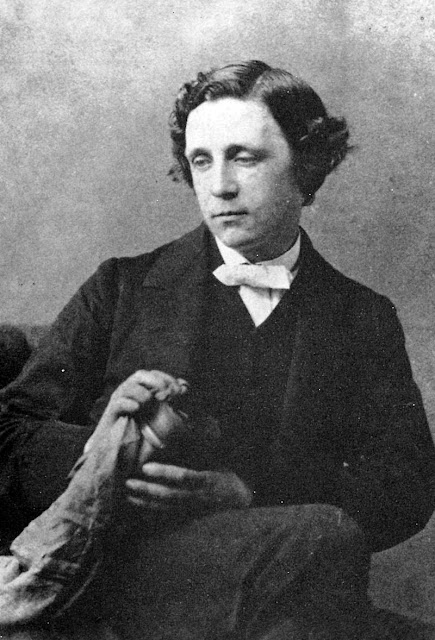
Lewis Carroll (1863). Photograph by Oscar G. Rejlander.

Dodgson wrote books on mathematics such as the formula of Plane Trigonometry and An Elementary Treatise on Determinants.

His perfectionism drove his publishers potty with his wish for every typed line to be exactly in line.

In 1856, a new Dean, Henry Liddell, arrived at Christ Church, bringing with him a young wife and children, all of whom would figure largely in Dodgson's life over the following years. He became close friends with the mother and the children, particularly the three sisters Ina, Alice and Edith. It seems there became something of a tradition of his taking the girls out on the river for picnics at Godstow or Nuneham.

Alice's Adventures in Wonderland grew out of story told by Dodgson on July 4, 1862 to amuse the three Liddell sisters. Afterwards he wrote down the story for the nine year old Alice. Originally written as Alice's Adventures Underground  in 1864, a year later he added Cheshire Cat, Mad Hatters Tea Party and others and changed its name to Alice's Adventures in Wonderland.

Alice in Wonderland sold only 48 copies when first published on November 26, 1865. By 1900 nearly 200,000 copies had been sold. The original manuscript can now be found in Philadelphia Free Library. Only 21 copies survive of the original manuscript, which was withdrawn because of printing errors.
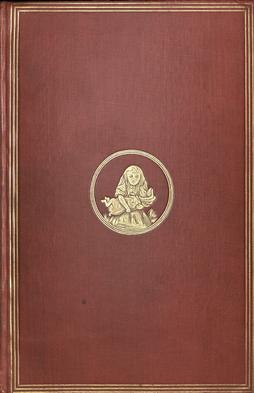
Original cover of Alice's Adventures in Wonderland

The Mad Hatter was probably inspired by Theophilius Carter, an Oxford furniture dealer who was somewhat potty and was well known for the top hat he wore. He was known as the "mad hatter."

There is no such thing as a Cheshire Cat. The county of Cheshire used to make cheese that came moulded in the shape of a Cheshire cat.

In 1872 Lewis Carroll published Through the Looking Glass, his follow up to Alice’s Adventures in Wonderland.

The Alice Band, a wide hair band of coloured ribbon is named after the band worn by Alice in Tenniel's illustrations of Through the Looking Glass.

Dodgson was regarded as a witty dandy in Victorian circles. He scattered many in jokes in his Alice books and his nonsense poetry was incredibly zany for the Victorian age.

Dodgson immortalised croquet in Alice in Wonderland when he depicted the Red Queen wacking rolled up hedgehogs using a flamingo for a mallet.

Lewis Carroll's nonsense poem "Jabberwocky" about the killing of an animal called "the Jabberwock" was included in Through the Looking-Glass. "Jabberwocky" is considered one of the greatest nonsense poems written in English, and has contributed such nonsense words and neologisms as galumphing and chortle to the English lexicon.

Carroll was known for his love of wordplay and puns. One day, he was out taking a walk with a friend when they came across a sign that read "Duck Crossing." Without missing a beat, Carroll turned to his friend and quipped, "Ah, I see they have the same idea as I have - to get to the other side!"

Dodgson had a negative attitude towards interviewers and never consented to being interviewed.

He was good at chess and billiards but apart from that not particularly sporty. Dodgson declared that his one attempted ball in cricket would have been a wide if it had ever reached the batsman.

Dodgson devised rules for a form of billiards played on a circular table.

Dodgson was a genius at inventing mazes, ciphers, riddles, magic tricks etc. Whenever he travelled he carried with him a black bag containing various toys and games for his young female friends.

His works are peppered with number 42. No one knows why.

Dodgson was fascinated by mirrors. He used them for conjuring tricks and used to write on them with invisible ink so that when the sun shone the writing was projected on the wall.

Dodgson wanted to go into church and was ordained as a deacon but his shyness and stammer prevented him pursuing a career. He also feared he would have to give up his visits to theatres and art galleries.

Dodgson had a tremendous reverence for sacred subjects and would leave a theatre if a joke on such matters was made in a play.

Alice in Wonderland was one of the first children's books not written for a moral purpose.

Dodgson refused to have his own photo taken on the Sabbath.

He would lie awake all night devising mental puzzles to keep erotic thoughts at bay.

Dodgson wrote 98,721 letters in the last 37 years of his life.

Dodgson showed some interest in the Jack the Ripper case; however, this is hardly unusual, given the profound publicity surrounding the crimes. A passage in his diary dated August 26, 1891, reports that he spoke that day with an acquaintance of his about his "very ingenious theory about 'Jack the Ripper'". No other information about this theory has been found.

At the unusually late age of seventeen, Dodgson suffered a severe attack of whooping cough which left him with poor hearing in his right ear and was probably responsible for his chronically weak chest in later life.

At Oxford Dodgson was diagnosed as an epileptic, then a considerable social stigma to bear.

The only overt defect he carried into adulthood was what he referred to as his "hesitation"—a stammer he had acquired in early childhood and which was to plague him throughout his entire life.

Dodgson lived most of his adult life at Christ Church College, Oxford. In the mid 1860s he settled in a 12 room turreted apartment on the north west corner of Tom Quad where he remained for the rest of his life.

His book royalties allowed Dodgson to stay at the same house at 7 Lushington Road in Eastbourne, East Sussex every summer for about 20 years. He also visited Whitby in Yorkshire 12 times between 1854-71 usually staying in a house in East Terrace.

The Walrus and the Carpenter and most of Jabberwocky was written on Whitburn Sands, Sunderland.

Lewis Carroll wrote standing up.

In 1867 Dodgson went on a trip to Russia with Dr Henry Liddon - his only major excursion. As the journey progressed Liddon became increasingly irritated with his companion’s taste for the absurd and curious & his indifference to catching trains on time.

Towards the end of his life Dodgson began to have "a very peculiar yet not very uncommon, optical delusion which took the form of "seeing moving fortifications."
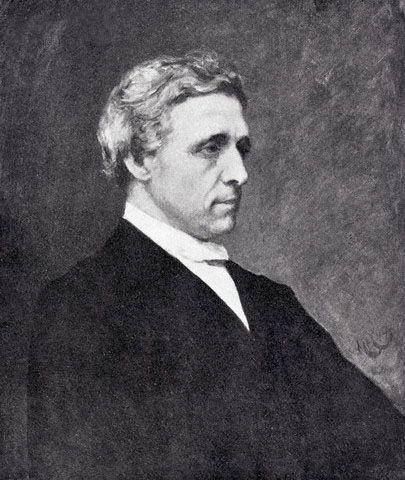
A posthumous portrait of Lewis Carroll by Hubert von Herkomer, based on photographs

Dodgson died on January 14, 1898 of pneumonia following influenza.at Chesthunts, Guildford, the residence of his sisters.

The funeral of Lewis Carroll was held at St Mary's Church in Guildford and he is buried in Guildford's Mount Cemetery.

Alice Hargreaves (Liddell) died in 1934 and is buried at St Michael’s Church, Lyndhurst, Hants.

Simon & Garfunkel first met in a 6th grade production of Alice in Wonderland.

Apart with The Bible and Shakespeare, Alice In Wonderland is the most quoted book in the Western World.

Here's a list of songs inspired by Alice in Wonderland and Through the Looking Glass.

Sources: Guinness Book of WordsPenguin Book of Interviews, Faber Book of AnecdotesWikipedia, Encarta.

Sunday, 5 January 2014

Carriage

The first carriage with suspension of its body by chains and ropes was developed in Europe sometime in the 13th century, for royalty and the aristocracy. It took its form primarily from the earlier two-wheeled chariots common to ancient Rome.

After the English Civil War, Oliver Cromwell set up the Fellowship of Master Hackney Carriages — the official name still used for ‘black cabs’ — in 1654 in one of his first Acts of Parliament. The name is from hacquenée, the French term for a general-purpose horse. It literally means ‘ambling nag’.

Dalmatians were once used by aristocracy as a coach dog to trot beside carriages and protect them from highwaymen.

An 18 ton funeral carriage carried Wellington's body to St Pauls pulled by 12 dray horses. It was so ornate and heavy that it cracked the streets of London along the route

Queen Victoria always pulled her carriage curtains when she passed through rougher areas to avoid the distressing sight of a working class tenement.

The word "dashboard" originated as a barrier of wood or leather fixed at the front of a horse-drawn carriage or sleigh to protect the driver from mud or other debris "dashed up" (thrown up) by the horses' hooves.

The first motor insurance policies were issued in Britain in 1896 but they excluded damage caused by horses frightened by the new “horseless carriages”.

During the early 20th century, horses were creating so much pollution with their poop that cars were seen as the "green" alternative.

The Rolls Royce Silver Ghost was a must-have for Edwardian Lords and Viscounts. Its luxury heralded the end of the horse and carriage as the aristocracy's preferred mode of transport.

Source Compton's Interactive Encyclopedia © 1998 The Learning Company, Inc.